This is Dave Edstrom's personal blog called Photons and Electrons. This blog is about technology, as well as some of my personal interests. I am the CEO/CTO of Virtual Photons Electrons. I was the CTO for MEMEX for three years, the President and Chairman of the Board for the MTConnect Institute from May 2010 to January 2014 and prior to that I spent 23 years at Sun Microsystems.
"MTConnect-B2MML is a companion specification to ensure
interoperability and consistency between MTConnect specifications and
the B2MML implementation of ISA95, as well as the manufacturing
technology equipment, devices, software or other products that implement
those standards.
This blog post is a culmination of years answering questions on MTConnect that I will keep updated as it is easier to just point individuals to one blog site I have as opposed to multiple blog posts or a very large email with all of these FAQs, Presentations, Webinars, Websites and ALL Things MTConnect. A lot of this earlier work was when I was President and Chairman of the Board MTConnect Institute.
MTConnect is an open, royalty-free standard built to foster
interoperability between devices, equipment and systems. Using XML and HTTP,
MTConnect defines, structures, and exposes real-time data throughout a factory.
Unlike previous interoperability
attempts, MTConnect’s common communication and data dictionary empowers
software developers to implement applications aimed at providing more efficient
operations, improved production optimization and increased productivity. MTConnect is elegant because of its simple
and scalable design.
Think of MTConnect as the “Bluetooth for manufacturing” with
the clear goal of “Different Devices,
COMMON Connection”.MTConnect has become the default interconnectivity
fabric to enable manufacturing dashboards to understand exactly what is
happening in a plant or shop, an M2M communication mechanism and a simple, yet
elegant way to implement IoT or the Industrial Internet of Things (IIoT). IIoT
has been predicted to be tens of billions of dollars per year with
manufacturing being a large percentage of that market.
John Byrd, former President of AMT, summarized the
significance, “MTConnect will be more
important for manufacturing in the 21st century, then CNC was in the
20th century.”Brian
Papke, former President of Mazak USA, stated the financial importance, "The
implementation of MTConnect is one of the simplest and fastest ways to improve
productivity and increase machine utilization. Mazak's MTConnect
implementation provided the highest ROI for any capital investment because of
the significant increase in utilization of equipment for a very moderate
expenditure."
A sample of global companies which joined MTConnect, that those
not in manufacturing have likely heard of, include Boeing, Bosch Rexroth, Cisco,
FANUC, Foxconn, GE (Aviation, Global Research, Power, Transportation), General
Dynamics, Lockheed Martin Electronic Systems, Mitsubishi Electronic Automation
and Palo Alto Research Center (Xerox PARC).
If you are in manufacturing or WANT to be in manufacturing, then you NEED to join the MTConnect Institute!
What Do I Need To Know About Connecting ALL Of My machine tools, 3D Printers, Sensors and Devices to MTConnect?
In terms of legacy connectivity and create your own or partner, it would be worthwhile to at least understand what MEMEX's MTC-One is capable of before you invest a lot of time and money into creating your own legacy hw/sw black box. There are other connectivity devices out there, such as Mazak's SmartBox where MEMEX brought together Cisco and Mazak for the three companies to work together on legacy connectivity.
While the above two "Getting Started With MTConnect" documents are a little dated, the principles remain and the list of shop floor monitoring companies is still a good list.
Here is the video that has Ben Schawe of Mazak speaking on their Factory using MTConnect at the [MC]2 2014 Conference.
It is very compelling and shows the power of MTConnect and shop floor
monitoring. This might be helpful in terms of a machine tool company
that is considering to use MTConnect in their own factory with shop
floor monitoring by "flying their own planes" or "eating their own dog
food" :-) It should also be noted that Mazak has really expanded with
using MTConnect and MERLIN beyond that point to include full OEE, an
operator panel, as well as that was an earlier version of MERLIN.
The MTConnect page at MEMEX is something I put together that has lots of MTConnect educational links and videos. There is a FREE Shop Floor Monitor that talks to ANY MTConnect device called MERLIN OPTime, as well as an MTConnect Agent Configuration Tool called MTCACT
Using Excel as a simple monitor for MTConnect - this is a short webinar that I show you how to use Excel as a simple monitor for MTConnect. It shows just how easy it is to talk to an MTConnect device.
In the above 40 minute webinar, I provide my personal thoughts on the
technical and business issues to be aware of when implementing MTConnect
for machine tools, devices or sensors.
The impetus for this webinar is the tremendous amount of interest I have
seen globally for companies and individuals who are considering
deploying MTConnect enabled machine tools, devices and sensors.
When I think of Industrial Internet of Things (IIoT) I think of
MTConnect. The reason for this is that monitoring and data analysis
begets more requests for additional information and this can be
accomplished by the addition of MTConnect enabled devices and sensors in
the plant.
Additional Documents For Those Wanting To Implement MTConnect
Device Functionality Group This is listing of what data items some of the machine tool vendors are supplying would be of interest. Info that is included is partial machine, control, and adapter support and functionality supplied by builders are listed here. Many additional devices are supported from the factory or via third party adapters, and the MTConnect standard may be extended to cover additional data items.
An
interesting exercise to find out what is available is to go out to some
of machine tool makers and see how they setup their MTConnect pages
such as Mazak, Okuma, DMG MORI and others where you can go to their homepage and search for MTConnect.
I was in Indianapolis this past week attending the first ever Top Shops put on by Modern Machine Shop.Huge THANKS to Mark Albert, Editorial Director, a true thought leader in manufacturing and a longtime friend as well, for inviting me to present Financial Overall Equipment Effectiveness(TM) (FOEE)(TM) at the Data-Driven Manufacturing Panel at Top Shops!
Mark was the moderator and always does a great job. He asked the audience of over 300 how many of them were monitoring their shops? I saw 8 to 10 hands go up. Mark then said, "I hope when we do this again in a year that there are a lot more of you monitoring your shops, as this is the most important thing you should be doing." I could not agree more with Mark on this advice!
Included below are some photos of the event and at the end is my presentation on MEMEX's FOEE: The Holy Grail of Manufacturing Data. As I have previously written, the first "killer app" I ever saw was VisiCalc.
For those of you too young to remember VisiCalc, it was the world's
first "visible calculator" or electronic spreadsheet and it came out in
1979. I remember demoing it in 1979 and the concept was so different,
that it took a little while for people to truly appreciate what was
going on, but when they did, they would push me aside and take over the
keyboard. At that point, I would start writing up the order :-)
I
believe the MEMEX's MERLIN
Financial Overall Equipment Effectiveness™ (FOEE™) will be the killer
metric for manufacturing as VisiCalc was the killer app for the entire
business world.
Dave
Edstrom is the CEO/CTO for Virtual Photons Electrons and has spent 39
(23 at Sun Microsystems) years in the computer industry with the last
twelve also in manufacturing. In the manufacturing world, Dave is best
known for his joint work in 2006 and beyond with UCB's Dr. Dave
Patterson to create the vision and framework for MTConnect at AMT's
Annual Meeting. Dave served as President and Chairman of the Board for
the MTConnect Institute from 2010 to 2014. Dave was the CTO for MEMEX
for three years leading product development and releasing world-class
products at IMTS 2016. Dave was named one of 30 visionaries in global
manufacturing by Manufacturing Engineering Magazine in 2016. Dave is a
prolific technical writer of numerous articles, white papers, interviews
and blog posts as well as he wrote the first ever book on open systems
and MTConnect titled, "MTConnect: To Measure Is To Know".
Above is the program.
Above is me presenting on Data-Driven Manufacturing and discussing my book, MTConnect: To Measure Is To Know, since data-driven manufacturing is a big part of my book. Mark Albert is to my right above. Thanks to John Rattray of MEMEX for taking the photo above, as well as it was great getting together with John and Barry of MEMEX on Tuesday evening.
Above is where I was interviewed by IMTS-TV.
Below are some cool things they have at the Indy airport :-)
I have worked a lot with the folks at SME - Society for Mechanical Engineers - and they do great work. This article is especially well written with numerous real life examples.
"Manufacturers of many stripes can save money just by making better
use of data emanating from the factory floor. But for those in aerospace
and defense—Airbus Helicopters is a prime example—the potential payoffs
are legion.
The combination of strict product-tracking requirements and high
labor and maintenance costs are driving adoption of data management
products
among aerospace and defense companies, industry insiders said."
Aerospace and defense are seeing tremendous payoffs from knowing what is happening on the shop floor. Dave McPhail nails it below:
“Every hour that I can save in taking it from a nonproductive hour to
a productive hour is of substantially more benefit to aerospace and
defense manufacturing than it is to, say, automotive or maybe food and
beverage packaging,” said David McPhail, CEO of Ontario-based Memex
Inc., which makes software that monitors machine efficiency. The
aerospace industry involves expensive equipment, personnel, and product
maintenance, which are all incentives to exploit shop-floor data, he
noted."
Long time friend and MTConnect thought leader, RonPieper of TechSolve discusses MTConnect and a great IIoT example that TechSolve deployed for an engine aircraft maker:
"Another enticement is the fact that some aerospace companies are
starting to require the MTConnect standard in their equipment purchase
requirements, said Ron Pieper, product manager at TechSolve Inc., a
Cincinnati-based manufacturing consultancy.
The ROI for aerospace companies adopting data-management tools is
evident, Pieper and others said. He cited an example of an aircraft
engine maker that wanted to monitor the consumption of a specific gas
during the manufacturing process. After TechSolve installed sensors on
the manufacturers’ gas lines, he said, they discovered a gas leak that
had amounted to an annual loss of roughly $100,000."
The article addresses the multi-billion question of WHY aren't more companies embracing MTConnect and shop floor monitoring?
"Despite all of the incentives for greater use of shop-floor data
products, aerospace and defense companies are not immune to the cultural
hurdles practitioners say are impeding digitization in the
manufacturing sector writ large. Some analysts estimate that the
percentage of manufacturers that have implemented data-management
software on the factory floor is still in or near the single digits."
My experience tells me that the number is in the VERY low single digits.
All of the individuals interviewed for this article nail the reason for slow adoption -- it is cultural and financial. Below are the points made on culture and MOST importantly, Crawl, Walk and then Run in your implementations.
"Making the jump to data-driven manufacturing requires a culture
within the company that sees data as the glue that can hold the factory
together, McPhail said. The goal is “one objective view of exactly
what’s going on in the factory,” he added.
One way of getting to that shared vision of data among management is to only bite off what you can chew.
“We actually caution shops, when I go talk to them about doing monitoring and data collection, about not trying to get too much data too soon, because the big hurdle is cultural; it’s not technical,” Pieper said. McPhail echoed that reasoning, urging manufacturers to identify
business objectives up front that data-driven manufacturing can help
realize. Of course, the flood of data available once factory machines are digitized can be overwhelming. Jody Romanowski, CEO of software vendor Cimco Americas, said
customers sometimes have grand ambitions for data collection—to want
operators to scan, for example, dozens of downtime codes when machines
aren’t running. Such high-volume scanning is often not feasible, so her
firm works with customers to break down the amount of data sought into
manageable categories.
“We’re always trying to find ways to make that happen more
efficiently,” she said of crunching data captured on the factory floor.
“That’s a huge consideration and still a struggle sometimes.” To avoid flooding customers with data, Wintriss only dispatches data
relevant to the customer’s mission, Finnerty said. “If we send a data
word from one of our controllers up to the database, every bit in that
word means something."
It is great to see MTConnect to continue to really grow and thrive.
I was asked to update a set of MTConnect Hands-On Training Lab slides I did for a visit to Taiwan back in 2012. Part of the update was making the MTConnect Simulator more interesting than just the single part being created that has been out at agent.mtconnect.org for a long time. Don't get me wrong, it is a nice and simple simulator, with the binaries, data files and instruction out at github.com/MTConnect, but it was time for an update for those who want to dig into the details of MTConnect a little more and provide a little more sizzle as well.
What I like about AWS webinars is that they tend to be very content rich and very well presented. This is in that same category.
It is interesting that these IoT discussions still miss the most important bit -- giving a common context aka dictionary for the huge variety of devices that are out there. The assumption is every developer knows what all of necessary specifics of what each device is capable of providing. The problem is that translation is forced to be handled by the developer and that never scales. This is where MTConnect could play a huge role.
In this 40 minute webinar, I provide my personal thoughts on the technical and business issues to be aware of when implementing MTConnect for machine tools, devices or sensors.
The impetus for this webinar is the tremendous amount of interest I have seen globally for companies and individuals who are considering deploying MTConnect enabled machine tools, devices and sensors.
When I think of Industrial Internet of Things (IIoT) I think of MTConnect. The reason for this is that monitoring and data analysis begets more requests for additional information and this can be accomplished by the addition of MTConnect enabled devices and sensors in the plant.
Please use the comment section of this blog for any questions or suggestions that you may have.
Thirty years ago today, May 4th, 1987, was my first day at Sun Microsystems. This is a long post because it is fun to think back over all of the great memories. Note: if you want to share this blog, http://TinyURL.com/DaveSUNW is the URL.
First off, it was far and away the best 23 years of my work life! It was incredible working with the smartest, most creative and without question the most passionate people on planet earth. I started off as a 27 year old and left at age 50. When I
started Julie and I had no kids and when it was all over we had three
sons age 22, 20 and 16. If I started to list all of the great friends I made at Sun it would be literally thousands of entries.
Words can not express how grateful I am for having had the opportunity to have worked at Sun Microsystems for almost 23 years. I have had more fun, learned more than anyone thought possible, and made a ton of lifetime friends. My wife and I have been to 7 Sun Rises (Sun's Club and trip for top achievers) and were able to see parts of the world we never would have seen without Sun. My favorite Sun Rise memory was sitting on the beach at Waikiki and watching my 12 year old son John and 10 year old son Michael swim out 100 yards, get up together and surf all the way in for the first time in their lives. My oldest son, John, became Sun's Campus Ambassador at Virginia Tech and had a blast doing that for Sun.
I have been asked many times over the years (especially during the tough times at Sun):
"Why do you stay at Sun?"
My response has always been the same:
"Scott McNealy and Sun's employees."
When they would ask me to expand, I would tell them about all the
things that were/are so great about Sun - the people, the mission, the
products, the integrity of the company, and it all starts with Scott. Scott will always be a hero to Dave Edstrom.
Sun was founded February 24th, 1982 with Sun standing for Stanford University Network (SUN). Below is the canonical photo of the four Sun founders (all of whom were 27 at the founding of Sun in 1982) with (from left to right) Scott McNealy, Andy Bechtolsheim, Bill Joy and Vinod Khosla.
In 1986, I was a Systems Engineer (SE) for SDC and technical lead for a HUGE and
extremely challenging opportunity for High Performance Workstations
(HPW) opportunity where Sun Microsystems was the digital workstation and
Masscomp was the analog workstation of choice. At the end of 1986 and
long after the completion of the bid and benchmarks, I started talking
to Sun Microsystems about working there. I started on May 4th, 1987.
Betsy hired me and was a great manager and leader. My mentor was Neil Groundwater who was clearly the smartest person in computers that I had ever met.
In the summer of 1987 we found out we won the HPW business that has
since been worth at least $2 BILLION to Sun Microsystems over the years -
yes that is B as in BILLION.Steve Ferry was THE Sales Rep on this opportunity and to this day is far and away the best Sales Rep I have ever seen/worked with and a great friend to this day.
When
I started for Sun I remember seeing this orange logo (without the word
workstation), when I was out in Mountain View at 2650 Garcia Avenue in
Mountain View (from Wikipedia), on a sign, but the logo to the right
below was logo Sun had up until 1996, and the large Sun logo below both the logos was the
logo from 1996 until Oracle acquired Sun in 2010. Vaughn Pratt of Sun designed the famous Sun logo, which features four interleaved copies of the word "sun"; it is an ambigram according to Wikipedia.
Scott McNealy always said to "work hard and play hard!" At Sun, we were known for our April Fools Pranks. In the McLean, VA office we had a few great ones as well. Longtime Sun employee, fellow Sun Prankster, SPARC God, Corvette and biking buddy, and all-around great guy John Meyer has captured these for historical purposes and absolutely worth checking out.
SunCLONE ONE in particular really needs to be checked out as this was "insanely great". Please note Steve Jobs STOLE that phrase from us :-)
Meet SMI's newest subsidiary, SundEnPjMsF,
the brilliant minds behind the SunCLONE ONE:
Neil Pierson,
Java MRI Real-Time Imaging Architect (JMRIA)
John Meyer,
Java Physicist and Quantum Computing Architect (JPQCA);
Dave Edstrom, Chief Genius and Technology Architect (CGTA);
Steve Fritzinger, Java DNA Neurosurgeon Architect (JDNAC)
One of my favorite Sun "foes" :-) over the years was Dr. Dennis Govoni. We had WAY too much fun pulling practical jokes on each other over the years, as well as doing some very important work. Dennis presented at VT's ACM Meeting. When Dennis left Sun, I wrote this blog post because Dennis was one of the best that Sun had ever hired. My all time favorite customer visit was when Bill Joy's office called and asked Dennis, Conrad Geiger and me to visit a company in Chicago. This company claimed to have *invented* a storage device using sub-atomic particles and aspects of quantum mechanics. We all made the trip out there on a very cold winter day. Let's just say, that this "company" clearly did *not* invent anything. Makes for great memories though... Dennis, Conrad and I laughed all the way back to the airport :-)
Above is my all time favorite Sun t-shirt! We often joked about how many t-shirts, polo shirts, jackets, sweaters, and yes - even Sun underwear one time from the storage group, that we would get at Sun. One of my favorite Sun apparel stories was the suggestion in the DC office that we should all bring in our Sun shirts that we no longer wanted and give them to a homeless organization in DC. Everyone thought it was a great idea until someone said, "do we REALLY want EVERY homeless person in DC to be wearing a Sun Microsystems shirt?" Oh yeah, good point. We then talked about chipping in and having "IBM Global Services" t-shirts made up, but did not go that route. We did have many homeless drives, but we decided to keep our older Sun shirts at home :-)
In April 1995 I exercised 4,000 options at $4.45 a share (split adjusted) to purchase a fully loaded 1994 Ford Taurus. Those 4,000 options gave me $17,800 to purchase the car and I took a little money out for some other minor things. Most of the money went for the 1994 Ford Taurus.
Anyway, back to the story. On August 28th, 2000 SUNW was trading for $255.62 a share (adjusted for splits). Sooooo, my 1994 Ford Taurus was worth $1,022,480 (which was 4,000 * $255.62)
I told the story back at a Sun meeting and the funny part of it was once
(years later) I was at a large Sun meeting and this Sun VP gets up
there and tells MY STORY. I raise my hand and say, "I'm the guy. I
STILL OWN that Ford Taurus." The Taurus was still "worth" $36,880 when I gave it away.
An event that was sold out and had a long waiting list was the Sun Microsystems Founder night at the Computer History Museum. I was in town and it was the hottest ticket in town with very limited seating. I knew I could not work the normal Sun channels because everyone at Sun was trying to do that, sooooo, I thought for awhile and came up with a plan that worked. Ask me in person on how :-)
A very interesting trip for me was visiting the old Sun campus after Facebook purchased it from Oracle. I was visiting because my oldest son John now works for Instagram/Facebook.
Below is the Facebook sign that you see from the road. Mark Zuckerberg had the old Sun Microsystems sign turned around so that when all Facebook employees leave the campus they see the old Sun Microsystems sign and are reminded that if they do not continue to execute they will end up like "that technology company." Obviously, I have mixed feelings about that message :-)
The first time I visited the Facebook campus John pointed out that they had forgotten to take down one of the old "Sun Badges must be displayed for entry"
Above is the signature of Scott McNealy on the 10 Year Anniversary of Sun Microsystems book we all received. Scott asked me how to sign it and I said, "how about to the east coast Bill Joy?" Scott laughed and agreed to sign it that way :-)
At VT on November 6th, 2007 Chris Melissinos surpassed anything that I have ever witnessed before.
The
audience was 60 extremely bright Computer Science students who are also
members of the ACM at VT. VT is one of the top Computer Science and
Engineering Schools that is well known for their deep Linux expertise.
The students started showing up early at 7:00pm and Chris spoke until 11:30pm with no breaks until we finally had to leave. The President of the ACM said:
"I have seen countless ACM presentations by every company you can think of and I have never - ever - seen this type of response and this amount of incredible interest."
Above is Mike Geldner finishing up a tremendous presentation at the same conference.
In 2013 John Meyer and Steve Fritzinger gave the opening keynotes and did an AMAZING job!
Processing Zetabytes: The Technologies Enabling Big Data and Analytics
– John Meyer of IBM’s Systems and Technology Group will put in
perspective where computing technologies have been and how they are
adapting to a big data future. Most importantly, John will discuss how
industry is positioning itself for a future where massive data analytics
will be in common use and how it is applying these technologies for
competitive advantage.
Manufacturing with Darwin, Moore, and Metcalfe
– Steve Fritzinger of Network Appliance brings together a unique blend of deep technical
expertise and economics knowledge to address problems for clients. Steve
is the economics commentator for the BBC program Business Daily.
Manufacturing is going through a great deal of change and it won’t be
the strongest that survive, but rather those companies that can adapt,
scale and connect. In this talk, Steve will describe how trends in
software, international trade and education policy will affect
manufacturing in the coming decade.
Getting together with Sun friends over the years is always a true pleasure. Folks such as John Morrell, Joel McClung, Brian Raymor, Brian Wong, Tim Wallace, Sue Walls, Joy Warfield, Harry Foxwell, Jim Fiori, John Gardner, Gary Grimes, Dick Bowman, Mark Connelly, Tom Merical, Bruce Haddon, Marie O'Brien, Anita Weber, Dave Profozich, Garry Jakoby, Dennis McLain, Cynthia Renshaw-Lion, Bob Ebling, Brad Kirley, Faye Melissinos, Wayne Gifford, MaryBeth Cockerham, James Hollingshead, Phil Morris, Paul Krein, Ray Voight, Rey Perez, Mike Dye, Mike Dergurahian, Mike Briggs, Adrian Cockcroft, Hal Stern, the other folks I mentioned in this blog post, as well as countless others that I wish I could list here are lifelong friends that all came out of the great Sun Microsystems.
It is very sad to think of Sun employees you are no long with us. Great individuals such as Brian Carney and Todd Hathaway come to mind immediately.
Below are some photos from the "40 Years of Patterson" blog that I put together of that amazing weekend celebration that I was lucky enough to be invited to!
Above is Dave Patterson and me.
It was great seeing the old Sun gang. To my left is Dr. Bob Sproull a legendary computer scientist who was at Sun for 21 years and next to Bob is the world famous John Gage
- known as the fifth Sun founder - the person who coined the term, "The
Network Is The Computer" and created "Net Day" where John convinced
President Bill Clinton and VP Al Gore to wire classrooms across the
country for Internet access.
Above on the left is Ed Kelly (former Sun Distinguished Engineer
who developed the first SPARC computer, Sun-4 systems architect, MBus
systems architect, SPARC-64), Dr. Bob Gardner in the middle (former Sun employee and father of SPARC - Lead instruction set architect of first SPARC microprocessor and
hardware co-designer of the Sun-4/200 workstation, the first SPARC
system, in the Advanced Development group (SunLab's precussor), defined key
aspects of 64-bit SPARC and co-sponsored SPEC consortium. Manged the I/O
ASIC design group (of 7) for the SPARC-Center-2000 "Dragon"
high-performance server.) and me.
I sat at the table with Ed, Bob and Bob Sproull and we had a great time
reminiscing at the Saturday night Dave Patterson dinner at the Hotel
Shattuck Plaza in Berkeley.
My most proud moment in those 23 years was working with Dr. Dave Patterson on MTConnect. In
March 2006, AMT asked me to come up with a speaker from Sun
Microsystems who also had knowledge of manufacturing to speak at AMT's
Annual Meeting in Lake Las Vegas. I went through three such speakers
over a six-month period as each one either left Sun on their own or had
their position eliminated. After the third speaker left the company, I
was out of candidates. I felt embarrassed for both Sun and myself that I
let AMT down. When I apologized to John Byrd, AMT's President at that
time, for not being able to deliver a Sun speaker, John suggested that I
do the keynote. I was more than happy to do this, but I knew little
about machine tools. John came up with a great suggestion: I could spend
two days at IMTS 2006 with AMT's CTO and VP of Technology, Paul
Warndorf, in preparation for the keynote. It was a brilliant idea and I
jumped at it. Paul took me around to countless exhibitors to learn about
the different technologies and ask questions about them.
After we finished the two days, I met with John and Paul where I made two observations and two suggestions.
My observations:
Manufacturing does not have a manufacturing problem. Manufacturing has a computer science problem. The
manufacturing industry was like the computer industry back in the
mid-1980s. There were too many network protocols and the fight was to
own the winning protocol. Back then it was very expensive and you had to
place a bet on which network protocol was going to win. It could easily
be an additional $700 to enable your PC to be networked in the
enterprise. TCP/IP and ethernet eventually won the network battle. When
this happened the number of computers networked grew by multitudes, as
did the software that would take advantage of the ubiquitous networking.
It was the classic story of a rising tide lifting all ships.
Until
you have an open and royalty-free way for these machine tools to speak
to the rest of the world, nothing else really matters and manufacturing
will just continue to struggle. The technologies are already out
there today with XML, http and TCP/IP. There was no need to reinvent the
wheel. A usable solution could be built on the de facto internet
platform that already existed. Additionally, it was important to avoid
the "country club approach" that had failed in the past in manufacturing
and other industries — the kind where you charge for the protocol and
you charge for each deployment.
The suggestions:
You need an economic wake-up call on why it is important to have an open and royalty-free way for these machine tools to speak to the rest of the world.
You need someone who has led a revolution or two,
since this is what we are really talking about. They asked me who I
suggested. I said the only person I would recommend would be Dr. David
Patterson of the University of California at Berkeley (UCB). Dave
Patterson is a computer pioneer and a true legend in the computer
industry. Dave is one of the most recognizable names in computer
science. I knew Dave because he was the advisor at UCB to Bill Joy. Bill
was a co-founder at Sun and has been called "the Edison of the
internet" by Fortune Magazine. Bill is a legendary programmer and system
visionary. I also knew Dave from working with him when I was chairman
of a futures conference in 2000.
John Byrd asked if I would reach out to Dave Patterson. Luckily, Dave agreed to work on the project provided I come out and brief him and that we work together on both presentations. I was thrilled to work with someone of Dave Patterson's stature. It was like being a high school basketball player and having Michael Jordan say he wants to work closely with you.
Dave and I worked very hard together to create two hour-long keynote speeches. Dave joked that if he knew how much time he was going to put into it, he might not have said yes to me. But our presentations were a huge success. Rick Kline of Gardner Communications came up to me afterwards and said that our presentations were two of the best that he had ever seen in manufacturing. It was great to see that we'd had such an impact.
In 2013, I wrote a boot titled,MTConnect: To Measure Is To Know, answers the question, "how and why a royalty-free and open source standard is revolutionizing the business and technology of manufacturing."
This is the world's first book on MTConnect and open systems. This book is not just about MTConnect, but it is first a book that discusses the many lessons learned in the world of open systems. Dave Edstrom has spent 35 years in the computer industry, where he worked at such companies as Sun Microsytems for over 23 years. Dave helps the reader understand that MTConnect is not an evolution in manufacturing, but it is a revolution and a true game changer. MTConnect is making possible the dreams and desires of generations of manufacturers, machine tool builders and manufacturing equipment providers who all want to see the same goal of different devices having a common connection on the plant floor.
Learn
how and why the lessons of open systems are being applied to
manufacturing and changing the business and technology of manufacturing
with MTConnect. It is available at Amazon in paperback and in Kindle format, at Google Play aka Android as well as on iTunes at Apple.
Above is the front of my book and below is the back cover. I am eternally thankful that both Dave Patterson and Scott McNealy wrote the recommendations on the back cover.
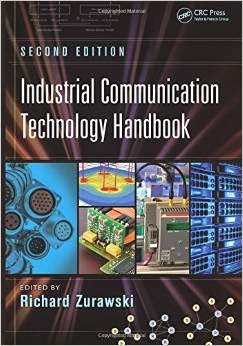
In the spring of 2014, I received an email from Dr. Richard Zurawski, who was referred to me by Dr. Dave Patterson of UCB, to to write a chapter
on MTConnect for the Second Edition Industrial Communication Technology Handbook. Dr.
Zurawski's book is THE book on industrial communications and was an
honor to be asked and an extreme honor to be included in this very
important book.
For everyone else, there are way too many people to thank from fellow employees to customers to partners and most importantly - family and friends.
Sun is just a memory now - much like Burroughs,
DEC, Apollo, Data General, Sperry Univac and countless other computer
companies that either acquired, merged or simply went belly up.....
Thanks to Sun and selling half my SUNW stock, (near the peak - it is better to be lucky then good and having my accountant drive home the point to diversify and my mother-in-law telling me stories of her friends at IBM that watched their stock go in the crapper drove me to sell and being a paranoid guy led me to sell 1/2 - thank god!) the photo above I took on our 25th Anniversary in 2008 when we spent a month in Europe with a 12 day cruise in the middle.
On Thursday the 27th, 2009, we held aSunDC Sunset Party
for former (and some current) Sun Microsystems employees. We were
hoping to get 20 to 30 to show up since it was a Thursday, it was a
prime vacation week and it was simply a get together. This was not Sun
sponsored and Sun did not pay for anything. We were shocked and
thrilled to have over 300 Sun employees (past and some current) show up.
We created a tradition where the third Thursday of July at Coastal Flats in Tysons, VA. It is an annual event that always puts a perpetual smile on my face thinking back on those great years.
This is Dave Edstrom's personal blog called Photons and Electrons. This is the same name of the blog I had for Sun Microsystems for many years. I am the CEO/CTO for Virtual Photons Electrons, LLC. More info is available at http://VirtualPhotonsElectrons.com I was the CTO for MEMEX for almost three years. More information on MEMEX is at http://MemexOEE.com