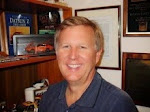
This is Dave Edstrom's personal blog called Photons and Electrons. This blog is about technology, as well as some of my personal interests. I am the CEO/CTO of Virtual Photons Electrons. I was the CTO for MEMEX for three years, the President and Chairman of the Board for the MTConnect Institute from May 2010 to January 2014 and prior to that I spent 23 years at Sun Microsystems.
"The original log book detailing UCLA professor Leonard Kleinrock and
his team using the Interface Message Processor (IMP), is seen at 3420
Boelter Hall in UCLA, May 3, 2011. UCLA professor Leonard Kleinrock and
his team used the Interface Message Processor, IMP, the packet-switching
node used to interconnect participant networks to the ARPANET to send
the first message, the letters LO to Standford Research Institute on
October 29, 1969. The UCLA ..."
Whether you've already implemented MTConnect
into your business operations, or you're just curious about what it has
to offer, [MC]2 is the place that will give you all those answers and
more!
Whether you've already implemented MTConnect
into your business operations, or you're just curious about what it has
to offer, [MC]2 is the place that will give you all those answers and
more!
Whether you've already implemented MTConnect
into your business operations, or you're just curious about what it has
to offer, [MC]2 is the place that will give you all those answers and
more!
Thank god President Obama is following up on his campaign promise to get us out of Iraq. What did we achieve with Iraq War 4,469 dead American soldiers and 32,213 injured Americans and 100,000 dead Iraqis for a couple of trillion dollars?
Thank god McCain was not elected president, because Bin Laden would still be alive (McCain said in a debate with Obama that he would not enter Pakistan to go after Bin Laden) and there is no way in hell we would be getting out of the endless Iraq war (as he recently complained).
Let's look at the costs of the Iraq war to get Saddam Hussein versus effort to get Muammar Gaddafi.
Saddam Hussein - $800 billion, 4,469 dead American soldiers and 32,213 injured Americans. This does not count the medical costs of taking care of these injured heroes.
Muammar Gaddafi - $1billion, 0 zero Americans killed and Syria might reimburse us the $1billion.
I am no math genius, but it seems to me that Obama is at least 3 orders of magnitude better at getting bad guys than Bush and that does not account for the true loss - the loss of lives and the injured Americans.
I am speaking today at the ISA Automation Week Conference 2011 in Mobile, Alabama. My topic is, "Why Lord Kelvin Would Love MTConnect - The Open and Royalty Free Protocol For Manufacturing". My paper was accepted by the wireless track because that is the one that deals with sensors. As I sit in the back, waiting to speak and looking around, I realized the rest of the audience are the speakers either before or after me. Well, at least it is nice weather outside today in Mobile.
My talk went well and I did have a nice discussion afterwards with an individual who was very interested in MTConnect for his plant.
IRA FLATOW, host: This is SCIENCE FRIDAY, from NPR. I'm Ira Flatow.
Up next: science under attack. In his new book, "Fool Me Twice," writer
Shawn Otto says science is under assault in America, and especially so
in Washington, D.C. While science informs almost every aspect of our
lives - think about climate change, energy, agriculture, medical
research - Otto says anti-science views are so mainstream and science so
marginalized that it's becoming a threat to our democracy.
Science
didn't always take a backseat in politics. The Founding Fathers
Jefferson and Franklin were themselves citizen-scientists, advocating
for an informed citizenry. So what happened? And is there a way to bring
science back into our social discussions, even into the presidential
debates?
Shawn Otto is here to talk more
about it. He is co-founder and CEO of Science Debate 2008. His new book
is called "Fool Me Twice: Fighting the Assault on Science in America."
Here is the section of Science Friday that caused me to ask the question of Bela:
FLATOW: Do you think that scientists themselves sat on their hands
too long and let things - let anti-science attack take place?
OTTO:
Absolutely. And that's one of the things that I've talked about in the
book. There are a lot of factors in play, but, you know, science used to
be thought of as an exploration of nature, and much of it still is. But
there's also a part of science that, in World War II, came to be used
as a weapon, an intellectual weapon to win the war.
And
that's a valid use of knowledge. Knowledge is power, as Francis Bacon
said. So why not use it as power? But after World War II, Vannevar Bush
made a terrific pitch called, "Science the Endless Frontier," about how
the government should continue to fund science moving forward.
And
he sold Truman on the tremendous advantages that that could bring to
the nation, and indeed, it has. It's possible that he made part of that
pitch too well, in that scientists really, after that point, didn't have
to engage in the same level of public outreach that they did before.
And
in fact, university tenure programs grew up that did not reward public
outreach, and often it was a disincentive. There is even something that
happened called the Sagan effect, after Carl Sagan was denied admission
to the National Academy of Sciences. And
that idea is that your popularity with the public is inversely
proportional to your contributions as a scientist. In Sagan's case, that
wasn't true. He published some 500 scientific papers in peer-reviewed
journals, probably about one a month over his 39-year career. And
indeed, recent research has shown that scientists that engage in public
outreach actually generally perform better academically, too.
FLATOW:
And so now scientists are more fearful, then, that if they speak up,
the same thing would happen to them? They're afraid of being ostracized?
OTTO: Exactly, and not only that, but that
science - or that politics came to be viewed as something that was dirty
or that was beneath scientists, and that it could taint your
objectivity. So why engage? Why take a risk in something like that?
FLATOW: And has - when has science become so political, and why is it so political? Or (unintelligible) be that way?
OTTO:
Yeah. There's - okay. So there's two questions there that are both
actually pretty interesting. First of all, why is it political? You
know, again, Francis Bacon said knowledge is power, and science is about
creating knowledge, and politics is the exercise of power.
So
science is always inherently political. Any time we extend the bounds
of our knowledge, that is going to have moral and ethical consequences
that are going to be political questions. Also, it's also going to
disrupt vested interests.
Climate change is a
great example of that. Scientists aren't out pursuing a political
agenda. They're pursuing the truth, and the truth is pointing them in a
particular direction. And we've seen this kind of thing happen over and
over again, when science has disrupted vested interests, be they
monetary, financial or be they religious interests.
Back to my question. I asked Bela, "I was listening to NPR and they had the author of "Fool Me Twice" on Science Friday with Ira Flatow. The premise of the author's book is that Americans are getting stupider about science. This is inline with what you just presented. The author stated that scientists are fearful about being vocal about science because of "news" outlets like Fox News that would attack them. My question for you is, what do you feel are the responsibilities of scientist to speak up? Obviously you are speaking up, but what are the responsibilities of scientists to speak up?"
His answer was, "that is a tough question. I only report to one person - my wife - so I have no fears. It is true that when Al Gore spoke up that they attack the messenger and not the message. It is very disappointing watching the recent debates. Science should be separate from politics, but it is not because individuals have something to be gained by having a certain opinion." He then discussed why he is hopeful in the long run for the planet. I went up and spoke to him afterwards and he was very nice. I had not heard of him, but listening to the folks speaking to him before I did, he certainly sounds like a legend in the industry.
McLean, Va. … Developed as a
guide for shop owners and plant managers exploring the MTConnect implementation
process, the MTConnect Institute is pleased to announce the release of the
"Getting Started with MTConnect - Connectivity Guide".
This guide is the result of a
year-long effort by the MTConnect Shop Floor Connectivity Committee. Thought leaders from 16 companies
representing a diverse cross-section of the discrete parts manufacturing
industry collaborated in the development of the guide. The committee was asked to address the most
fundamental question shop owners and plant managers have when they decide to
implement MTConnect — "how do I get started?"This guide
addresses connectivity issues associated with both new and legacy manufacturing
equipment and provides a structured framework to guide companies through the
assessment of their equipment and the early planning stages of a project.
This guide is a valuable tool for anyone in manufacturing who believes
that improving productivity starts with understanding what is happening on the
shop floor.
The foundation for improving
manufacturing productivity starts with easy access to data. MTConnect provides
manufacturers with a simple and extensible mechanism to connect manufacturing
equipment to software applications used to run their businesses.
Dave
Edstrom, President and Chairman of the Board for the MTConnect Institute said,
“This Connectivity Guide will be an extremely valuable tool for shop
owners and managers who need to address productivity issues in their
manufacturing operations.
I am asked the same question almost daily – How do I get started? This
guide answers that question. The Connectivity Guide is the first piece
to be released in our ‘Getting Started with MTConnect’ series. Additional
documents will be released soon to further
support manufacturing companies that are adopting productivity solutions using
MTConnect.”
David
McPhail, President & CEO of Memex Automation Inc. and co-chair of the
MTConnect Shop Floor Connectivity Committee
said, "It was a pleasure working with such a talented and energetic team
of experts who are all focused on addressing
manufacturing productivity issues. By applying the techniques defined in the Connectivity
Guide, essentially every
piece of manufacturing equipment can now be integrated into a manufacturing
data system — empowering productivity improvement on the shop floor for all
machines."
John Turner, Director of Technology for FA
Consulting & Technology and co-chair of the committee said, “Bringing the capabilities of MTConnect to existing
machine tools will allow manufacturers to increase productivity of their
existing assets, driving down costs and increasing
plant output. Success of any project is typically based on good planning. The Connectivity Guide provides a valuable tool to
help manufacturers structure their projects and prepare for discussions with
solution providers.”
The Working Group was made up of representatives from:
MTConnect®Institute MTConnect
Institute is an organization that develops and provides open standards intended
to foster greater interoperability between manufacturing controls, devices and
software applications by publishing data over networks using the Internet
Protocol (IP). The standards offer a solution to the exchange of data from shop
floor devices to higher level systems. For membership information, visit www.MTConnect.org.
MEMEX
AUTOMATION Memex Automation Inc. brings 18 years of experience in
manufacturing connectivity solutions. Memex delivers shop floor to top floor
connectivity, automating the process of communicating information between
business systems and the machines on the shop floor to increase productivity
and decrease costs. More information can be found at www.memex.caor by e-mail
to sales@memex.ca.
FA Consulting and Technology (FAC&T)
FA Consulting & Technology (FAC&T),
located in Charlottesville, Va., provides expertise for an array of control
system and process automation solutions for the manufacturing industry. Their
mission is to maximize productivity from manufacturing assets through the
integration of existing and emerging technologies to reduce errors, improve
maintenance practices and increase the overall productivity of manufacturing
processes.
This is an exciting day for MTInsight at the 2011 Global Forecasting & Marketing Conference here in Cleveland at the Intercontinental Hotel which is located in the Cleveland Clinic campus. This conference is loaded with great speakers and sessions and I am sure MTInsight will generate lots of excitement for those attending. (Above is view from my room.)
Manufacturing Business Intelligence
Just as a reminder, I am including a blog post I wrote previously on MTInsight.
What is MTInsight? MTInsight is a state of the art manufacturing business intelligence platform that hosts applications for AMT’s members as well as non-members.
Before we get into a more detailed description of MTInsight, it is
important to make sure we are all on the same page with some
definitions.
The
overall purpose of business intelligence is to synthesize business
information from a variety of sources into a format enables better
decision making. Business intelligence (BI) software is typically made up of three major parts:
Lots of adapters to a variety of information resources.
Examples
of these are adapters to databases such as MySQL, accounting
systems, inventory systems, sales systems, Customer Resource
Management (CRM) systems, Enterprising Resource Management
Planning systems (ERP), spreadsheets,
web services, old IBM mainframes, CSV files, text files, XML
files, and basically anything else that you can think of. The more adapters you have, the better. Many times, all of this data ends up in a large data warehouse. Today, these data warehouses are usually housed in the cloud. MTInsight’s large data warehouse is in the cloud.
Software tools to slice and dice the data in any fashion that is needed for the analytics.
Usually, BI software has the ability to call other languages as
well to augment the tools the BI vendor also provides. It is not unusual to see JavaScript and Java as programming languages that can also be used with the BI software. Structured Query Language (SQL) is also very important for accessing data from databases.
Graphics visual tools to a wide variety of output devices is key to any BI software program.
This is the logical last step after a BI developer has connected
to a large number of data sources and has done lots of
calculations. This what
the business person who wants to see the data in reports, charts, graphs
or other types formats wants to receive.
Business people want to receive this information whether or not
they are at their desk or on the road or at home and they want to
view it on any device that they have in front of them. Supporting lots of output devices as well as output formats are important.
MTInsight is built upon Actuate’s BIRT onDemand BI in the cloud software. Actuate created BIRT (Business Intelligence and Reporting Tools) which is an open source
project. BIRT is known as one of the premier BI platforms. BIRT
onDemand is the Software as a Service (SaaS) platform MTInsight uses to
access information from the very large MTInsight data warehouse in the
cloud, analyze the data and then display it to a wide variety of
devices. We spent a tremendous amount of time analyzing BI vendors
before we made the decision that Actuate was far and away the best
choice for MTInsight.
What is manufacturing business intelligence? This phrase for MTInsight is really a double entendre. First, it is manufacturingbusiness intelligence or creating business intelligence. Second, it is manufacturingbusiness intelligence
or business intelligence about manufacturing. How I like to think
about MTInsight is that it is your virtual business intelligence
department for manufacturing. If you have a browser, you have a virtual business intelligence department for manufacturing.
We discussed the three parts of BI. There are also three parts of MTInsight. Those three parts are:
1.Pat McGibbon, AMT’s Vice President of Strategic Information and Research (SIR) and his extremely talented SIR department. These
are the manufacturing industry experts who are statisticians,
economists, researchers, mathematicians, programmers, database experts,
BI experts and a number of other areas of expertise. This is what I
like to call “MTInsight’s secret sauce.” These are the folks who
manage all the data sources, write the analytic software programs that
create the MTInsight charts and graphs that you see.
2.MTInsight data warehouse.
This is the combination of all those data sources that I mentioned
previously. I like to call this database equivalent to Metcalfe’s
Law. Metcalfe’s Law is stated as the value of any network is the number
of nodes or devices squared. In other words, with just one website
you don’t really have a lot. With a million websites, now you have
something of real value. With databases, the more data that you can get
into the data warehouse, the more interesting questions you can start
asking because you have the data to do the interpolations,
extrapolations and generally ask the interesting “what if” questions
that all of us are familiar with when you sit down in front of a
spreadsheet. The difference is with MTInsight, you now have access to
tons of data that you likely could not afford on your own or simply
would not have access to at all. AMT invests a lot per year in keeping
its many data sources all up to date. These are internal data sources
where ATM literally is the keeper of the data as well external data
sources that AMT pays for.
3.BI software. This
is Actuate’s BIRT onDemand SaaS that I referenced earlier. BIRT
onDemand is what AMT uses to both build these many manufacturing
business intelligence applications as well as where they are hosted in
the cloud.
There is a lot more that I could write about MTInsight and look for many more articles in the IMTS insider in the future. Just like MTConnect, MTInsight will be a game changer for manufacturing! Check it out now at MTInsight.org
I rode with Jeff Stone this year for the tenth year together on the Seagull Century.
Jeff Stone is long time friend who I met while working at Hot Shoppes at Springfield Mall when I was 16. I was a busboy while Jeff had the high level and socially elite "floater" position. Jeff was making $2.15 an hour versus my $2.05 an hour. What did a floater do? A floater just had to keep the coffee and tea filled up at the drink stations. How hard was that? A busboy on the other hand had to clean every damn thing in the restaurant from tables, to bathrooms, to carpets, to you name it. Someone throws up - "oh, busboy, come over here and clean this up." A five year craps on the floor in the restroom, "oh, busboy, come over here and clean this up." No one ever yelled, "oh, floater, come over here and clean this up." Floaters were the 1%, the Wall Street elites, the bourgeoisie of the Marriott Corporation. Today, we would all be protesting outside the homes of the parents of these high paid floaters (floaters could not afford to live on their own in the mid 1970s even on $2.15 an hour). This still makes me mad how overpaid Jeff was for that position, but I digress :-)
Anyway, Jeff and I rode together for the tenth year on the Seagull Century. I flew in from Colorado Springs (with Karl Rove) and took off right after I got home to Salisbury, MD. After Jeff got his very nice suite at the Residence Inn, he took great care in getting me a room at the Hampton Inn since I was arriving later that day. It is not often that one has the opportunity to sleep in a smoking room with more ash trays than an Alabama truck stop and right next to the elevator as well as the diesel powered ice machine. Thanks Jeff :-) I had to bust on Jeff since he was nice enough to get a room reserved, otherwise I would have been sleeping in OC, MD. Salisbury hotels have the very nice habit of going into two night minimums during the Seagull Century weekend since they know most local DC/Baltimore riders only need a hotel room for Friday night. They learned this act of gratitude from Ocean City, MD. This is why we just wait and get the rooms the Friday before the race when we arrive. We had a great dinner at Brew River - a local Salisbury favorite.
It was a tale of two Seagull Centuries. The first 63 miles (metric century) was absolutely perfect - not a cloud in the sky and no wind. It was Corvette weekend in OC, MD and we must have seen 60 different Corvettes drive by which is great for me because I was wearing my Corvette Racing biking jersey and I could bore Jeff with Corvette trivia as we rode.
After lunch things changed a lot. We had a constant 25 mph headwind with gusts up to 35mph. It was like two different rides. Both of us had to take advantage of the bike repair tents this ride. Jeff had the techs fix the annoying squeak in his headset on his handlebars and I blew out a rear spoke at the 80mph mark. Luckily, the final rest stop was at the 83 mile mark and the techs there took the wheel apart to replace the spoke. Of course it was a spoke on the rear hub side which is the toughest to get to and to replace since it involves taking off the rim, removing the tire, tube, rim tape, taking off the rear sprockets all so you can replace one spoke. The tech told me that this is where 90% of the spokes break because the rear tire has the most weight, the most torque and it is the side with the sprocket that is the most vulnerable. The tech did in 20 minutes what would have taken me an hour and half - IF I had all my tools with me which I did not - of course. I gave him a nice tip even though the Seagull Century includes this as part of the ride only asking riders to pay for parts.
Jeff kicked butt this year and led the hardest part of the ride - the final 25 to 35 mph headwind. In years past, I had led the way back after lunch. I am blaming it on not doing enough long rides this year compared to other years or I am just getting old, maybe it is both.
The beer garden at Salisbury University is the Mecca for all bike riders after the Seagull Century and we had a couple of beers there before we headed home. A 3 hour drive after riding 100 miles just seems like a very, very long drive home.
Below is Jeff Stone on my left after we had lunch and were checking out the great weather at Assateague Island, MD.
Below is a 1 minute video at Assateague Island, MD after we had lunch. This was taken just before you get on the Verrazano Bridge that connects Assateague Island to MD. Hopefully we will be doing Seagull Centuries for years to come...
Whether you've already implemented MTConnect
into your business operations, or you're just curious about what it has
to offer, [MC]2 is the place that will give you all those answers and
more!
This is Dave Edstrom's personal blog called Photons and Electrons. This is the same name of the blog I had for Sun Microsystems for many years. I am the CEO/CTO for Virtual Photons Electrons, LLC. More info is available at http://VirtualPhotonsElectrons.com I was the CTO for MEMEX for almost three years. More information on MEMEX is at http://MemexOEE.com