Tuesday, June 25, 2013

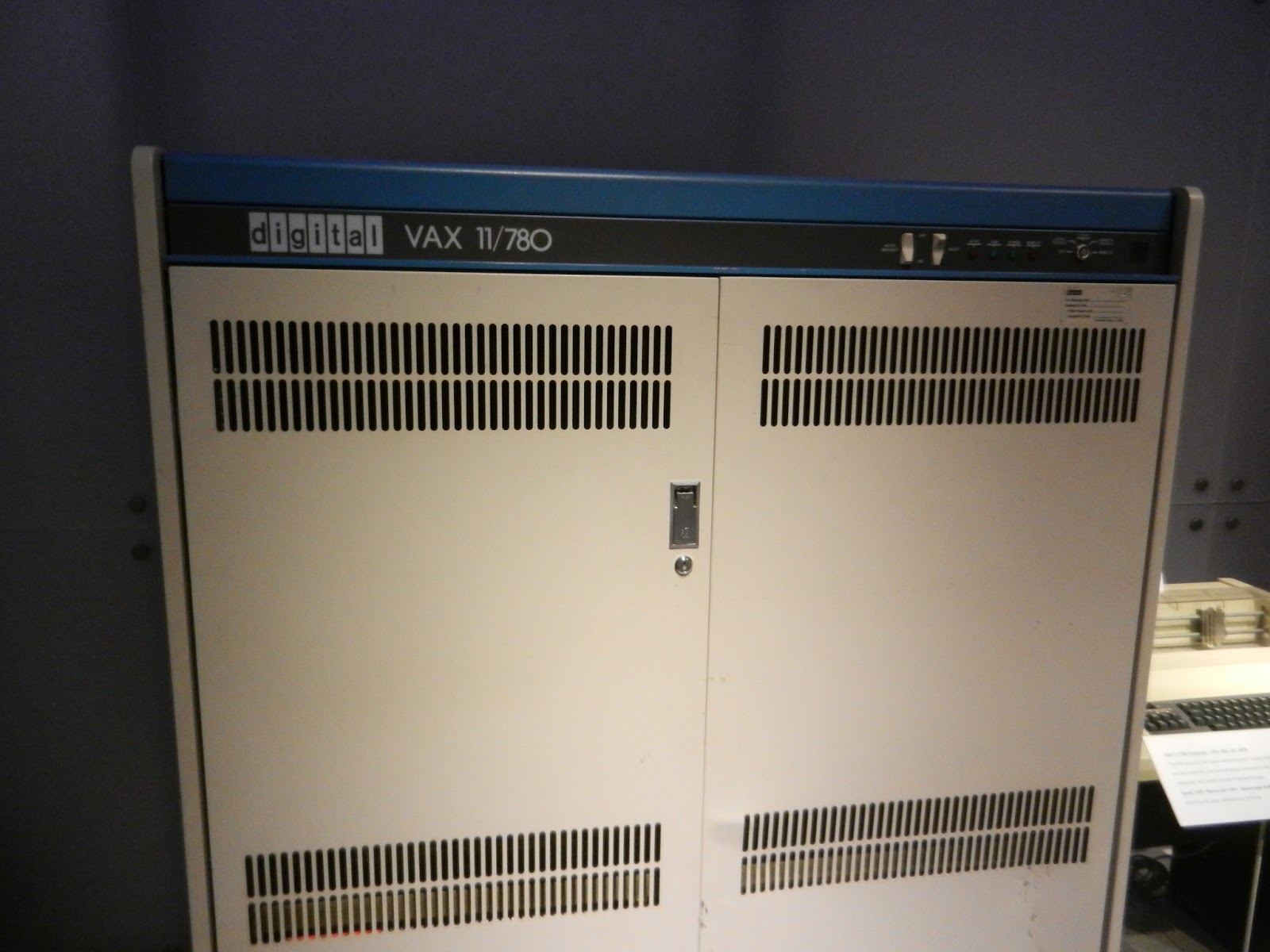
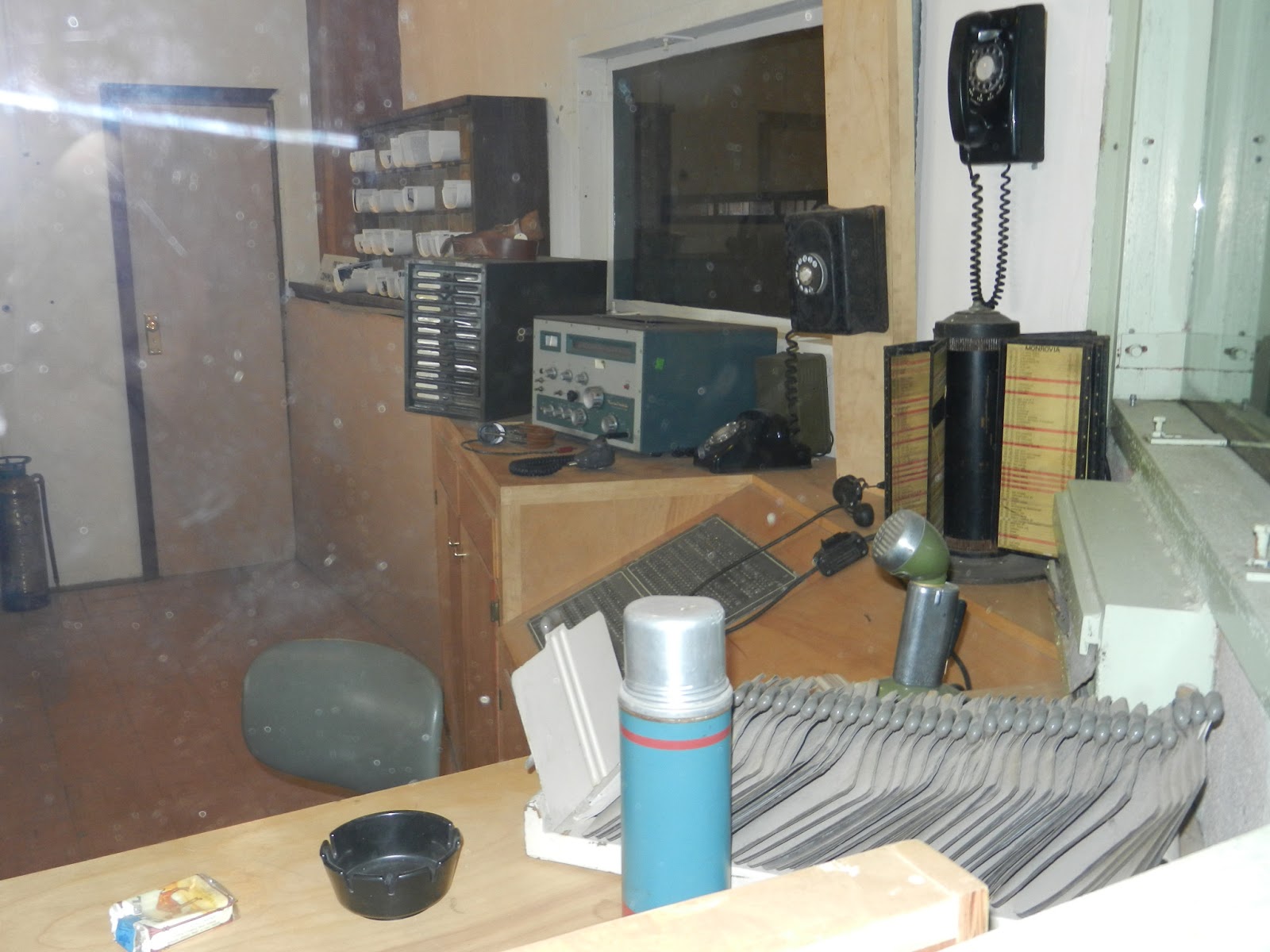
Visit to the Computer History Musem

I used to work at Burroughs, so I had to take a photo of this old adding machine.


Above is a punch card machine just like the one I learned how to program on as well as what I used when I worked for the Bureau of Economic Analysis under the Department of Commerce back in the late 70s.


Tim and Julie listening to the story on ENIAC


That Radio Shack TRS-80 Model 100 was REALLY popular back in the day.  Very simple notebook computer with a built-in word processor and no disk drive.  32 KiloBytes of memory for $1400.  Ran for about 20 hours on 4 AA batteries.  Writers and journalists loved this because it also had a built-in modem.


I remember the day the Robert Tappan Morris worm was released on the Internet.  It was a security eye opener around the globe.


My first computer I bought - I still have, but it is in a museum.  Yes, I am old!


In front of IBM's Watson exhibit.


 The google car below.


Monday, June 24, 2013

Alcatraz Tour with Tim


My youngest son Tim said he enjoyed the Alcatraz tour the best, so I thought I better put some photos up of our visit.


Sunday, June 23, 2013

Visiting My Godmother Dorothy Johnson in Glen Ellen, CA


Julie and I visited my godmother, Dorothy Johnson, at her Glen Ellen home.

Below are some pictures of me, Julie, my Aunt Dorothy and her oldest son Jim.  The last time I saw Jim was 47 years ago when I was 7 and he gave me a ride on his motorcycle.  We joked that we better not wait another 47 years :-)


Larry's Yacht With Golden Gate in Background


When we were visiting John and Janet we were on Alcatraz when the Oracle America's Cup yacht went flying by. 

Saturday, June 22, 2013

Visit to Yosemite


Tim, John, Janet, Julie and me.


Wednesday, June 19, 2013

Napa and Sonoma Wine Tours


Below are some photos of our visit to John in San Francisco, where on the first day we did the Napa and Sonoma wine tours.


Me and Julie above at the Jacuzzi Winery with John and Janet below.


We had lunch in Sonoma with from the left - Julie, Gabe, John, Gabe's girlfriend Alena, Tim, Janet and me.


Tim and John shooting at Bass Pro Shops where we had to stop for a break.

Below was Tim's default restaurant - In-N-Out Burger.


Sunday, June 16, 2013

The "Machine Whisperer" at [MC]2 2013

Below is a great video on The "Machine Whisperer" at [MC]2 2013 created by Jake Ervin and Diyana Hrzic of AMT - The Association For Manufacturing Technology at [MC]2 2013.  This is part of IMTS iSPY Videos. 

Thanks Jake and Diyana - very creative!

Cyber Security and Manufacturing

Note: I wrote this article for the June 2013 IMTS Insider 

When you live in the Washington, DC, area, cyber security and security in general are simply a part of your daily life. This is true whether or not you are in the computer industry or a different industry altogether. As manufacturing continues to embrace complete supply chain integration, cradle to grave digital thread tracking of parts, open and royalty-free standards such as MTConnect, as well as networking across the board, the importance of cyber security in manufacturing will continue to grow. This article will be the first in a series of articles on the topic of cyber security.

At one end of the cyber security spectrum would be basic password security practices, and at the other end would be protecting a plant against a state-of-the-art nation-state attack on a manufacturer’s infrastructure. Most individuals have heard of the most famous cyber security event in manufacturing - Stuxnet. Stuxnet was a computer worm that targeted Siemens PLCs with the goal of remaining undetected, changing the frequency of drives to cause production issues with industrial equipment such as centrifuges. Iran’s nuclear program was believed to be a primary target. The scope of this series of articles is not designed for the level of detail needed to properly discuss the security issues needed to protect a company against a Stuxnet class piece of software. Instead, these articles will address the more common security practices that can help all companies in manufacturing, as well as other companies in different non-manufacturing industries.

The way to think about security is first from the absolute highest level and then work your way down from there. The highest levels of security have to do with the nature of information in general, such as data at rest and data in flight. Data at rest is information that is sitting on disk drives and should be encrypted. Data in flight refers to information that is being moved from one location to another and should also be encrypted. Encryption means that the information is “scrambled” and is not readable without the appropriate key. The size of these keys and the encryption algorithm are just a couple of the decisions that must be made. Individuals earn Ph.Ds researching these topics alone. The National Security Agency has acres of computers that are tasked with decrypting information as part of its Signals Intelligence (SIGINT) mission. The other key NSA mission is information assurance. We will discuss information assurance in future articles.

Does your company have a CSO – Chief Security Officer? If the company is a large, world-class manufacturer, they better have a CSO. If not, does your manufacturing plant undergo cyber security audits? Who in your company is responsible for cyber security? Being disconnected from the Internet is likely not a viable option. Some companies use a demilitarized zone as a security perimeter. A DMZ is a network that is fenced off a company’s network and acts as another security layer between the Internet and a company’s network.

If your company does have a CSO, then that person would be very aware of the resources that are available, such as U.S. Department of Homeland Security National Cyber Security Division. NCSD operates the Control System Security Program. As is stated at the Industrial Control Systems Cyber Emergency Response Team’s homepage, their mission is to “reduce risks within and across all critical infrastructure sectors by partnering with law enforcement agencies and the intelligence community and coordinating efforts among federal, state, local, and tribal governments and control systems owners, operators, and vendors. Additionally, ICS-CERT collaborates with international and private sector Computer Emergency Response Teams (CERTs) to share control systems-related security incidents and mitigation measures.”

In the computer industry, the Computer Emergency Response Team Coordination Center at Carnegie Mellon University’s Software Engineering Institute is where many times the first warnings of computer malware, viruses and worms are made known. These warnings and suggested procedures to remediate are sometimes called “CERTS” for short. Security experts carefully monitor the CERTS that come out to make sure they are being proactive in their cyber security measures.
Cyber security is a world unto itself and the goal of these articles is to explain these technical concepts in layman’s terms to help readers better understand, appreciate, and hopefully act upon.

NOTE: If there are specific areas of security that you would like me to address, then please comment on my blog here and I would be happy to incorporate them in a future article.

Thursday, June 6, 2013

Come On Oracle, Get Serious About Java Security


In reading a blog post on Oracle's handling of Java's security, I read:

"Whenever Oracle makes an acquisition, acquired product lines are required to conform to Oracle policies and procedures, including those comprising Oracle Software Security Assurance.  As a result, for example, the Java development organization had to adopt Oracle’s Security Fixing Policies, which among other things mandate that issues must be resolved in priority order and addressed within a certain period of time"

Oracle, please..... Are you REALLY implying that Sun Microsystems did not take care of Java's security?

Tuesday, June 4, 2013

Robots and MTConnect at NIST

Great article on robots and MTConnect at NIST.  

Below is a snippet...


"Once uncommunicative industrial robots and machine tools are now beginning to talk turkey, thanks to a prototype application developed by a team of partner companies led by the National Center for Defense Manufacturing and Machining (NCDMM). This application was successfully demonstrated and tested by manufacturing researchers at the National Institute of Standards and Technology (NIST).
The practical advance stems from a “generic bridge” devised to span a costly, performance-slowing language barrier in factories. In effect, the innovation is a translator that converts data and messages written in two languages—one preferred by robotics researchers, ROS-Industrial, and the other by the builders of machine tools, MTConnect—into a form understandable to both.
The link eliminates the need to do a full-blown conversion of computer codes to get robots and machine tools from different vendors to handle complex interactions smoothly. Instead, using the bridge entails writing the equivalent of a mutually understood introduction—a “wrapper” in software parlance—that makes it possible for the entire message to get through."

Sunday, June 2, 2013

DMG/MORI SEIKI Announces MTConnect Support For Machines with MAPPS Control


I thought this was a great announcement from DMG/MORI SEIKI.  Below is a snippet:

"As of June 1st, 2013, all new DMG/MORI SEIKI machines equipped with MAPPS control come installed with an MTConnect Standard V1.1 compliant MTConnect Adapter. With pre-installed MTConnect Adapters, DMG / MORI SEIKI customers will have a plug-and-play solution that allows easy, real-time monitoring of their machines—from anywhere, at any time. This remote-monitoring capabilityis enabled with MTConnect—a standard, open Web protocol that allows interconnectivity between manufacturing equipment, peripherals and software. For data collection, archiving and reporting, customers have the option of choosing DMG / MORI SEIKI as their single-source remote monitoring vendor, or a third-party vendor."

Saturday, June 1, 2013

New white paper, “Getting Started with MTConnect – Shop Floor Monitoring, What’s in it for You?”

Below is the press release that came out from the MTConnect Institute on Thursday May 30, 2013.   Dave McPhail was the chair and I was the co-chair along with a very talented group of individuals whose companies are listed below in the press release.

The MTConnect Institute announces a new white paper, “Getting Started with MTConnect – Shop Floor Monitoring, What’s in it for You?” This white paper demonstrates the tangible benefits of monitoring a manufacturing plant using MTConnect, the open and royalty-free standard, as the way to collect data and information from the shop floor.

MTConnect is a set of open, royalty-free standards intended to foster greater interoperability between manufacturing controls, devices and software applications by publishing data over networks using the Internet Protocol.
The white paper discusses the almost limitless ways companies can use the data obtained via MTConnect to improve operations, track production and justify decisions that affect plant operations. Some of the common uses for shop floor data and topics covered in the paper include:
  • •Production Dashboard;
  • •Monitor Alerts; Equipment Availability and Usage;
  • •Overall Equipment Effectiveness;
  • •Production Reporting/Tracking;
  • •Energy Conservation;
  • •Mobile:  Anywhere, Anytime Access to Plant Floor Information;
  • •Quality and Statistical Process Control;
  • •Data Mining;
  • •Genealogy; and
  • •Security.
“The first and most obvious application for MTConnect is monitoring the shop floor to gather data, learn and make improvements based upon that knowledge. This white paper is written for the shop owner, plant manager or CEO,and focuses on the business-related features and benefits of MTConnect,” says Dave Edstrom, president and chairman of the board for the MTConnect Institute and the CEO/CTO of Virtual Photons Electrons.

David McPhail, president and CEO of Memex Automation and Chairman of the MTConnect Shop Floor Monitoring Working Group states, “As vendors of shop floor monitoring systems, we are often asked by prospective customers ‘what’s in it for me?’ and ‘how do I specifically benefit from an expenditure in monitoring my shop floor operations?’. This white paper answers those questions directly and our hope is that it creates the desire for prospective users to move from thought to action. The uses of data collected from the shop floor are vast, create immense business value, and should appeal to a wide array of end users.

This guide was created by the MTConnect Shop Floor Monitoring Working Group, made up of members of the MTConnect Institute Technical Advisory Group, with McPhail as the working group Chairman and Edstrom as its Co-Chairman. Working group members are a mix of MTConnect software and hardware solution providers, as well as end users who have real-life experience with MTConnect at their manufacturing facilities:
  • •Memex Automation Inc. (Chair)
  • •General Dynamics – OTS
  • •Scytec Consulting Inc.
  • •MacKintok Inc.
  • •Connecticut Center for Advanced Technology, Inc.  (CCAT) 
  • •Task Force Tips
  • •Remmele Engineering, Inc.
  • •System Insights, Inc.
  • •Virtual Photons Electrons, LLC (Co-Chair)
The ‘Monitoring Your Shop Floor’ white paper is the companion document to the MTConnect Institute’s ‘Connectivity Guide’ white paper. The ‘Monitoring Your Shop Floor’ white paper provides the ‘why,’ and the ‘Connectivity Guide’ provides the ‘how.’ Together these two white papers provide businesses with a complete explanation of the benefits of using MTConnect as the conduit to monitoring a shop or plant.

Both white papers are available at MTConnect.org under GettingStarted/WhitePapers/Manufacturers.

Monday, May 27, 2013

Sun Microsystems - SunDC - 4:30pm on Wednesday July 17th at Coastal Flats in Tyson's !


Attention Sun DC Alum!

There is going to be another summer Sun reunion party on Wednesday July 17, 4:30 p.m. at the same location we did last year -

Coastal Flats, Tyson's Corner Center (Tyson's 1). 

In order to help prepare the staff at Coastal Flats for the crowd, please respond to sundcreunion  ( at )  gmail.com if you can attend!  Please also help us spread the word and forward to all your old Sun friends.

We hope to see everyone there!

CRenshaw, DEdstrom, DWalker, KFox, REbling

Memorial Day 2013

Thanks to my father John Kenneth Edstrom who did two tours of duty in Vietnam as an officer in the Air Force.  My father is also in the very unique category in that he was awarded TWO BRONZE STARS for the two tours of duty for his countless acts of bravery in his two years in Vietnam.  The Bronze Star Medal is a United States Armed Forces military decoration that may be awarded for bravery, acts of merit, or meritorious service.  

Thanks to my cousin Chris Edstrom who has done two tours of duty in Iraq and two in Afghanistan and who is back to both countries now as a contractor.  Thanks to Dr. Harry Foxwell, Paul Warndorf and Brad Kirley for their service to our country.

History of Veterans Day as stated at TimeAndDate.com

On the 11th hour of the 11th day of the 11th month of 1918 an armistice between Germany and the Allied nations came into effect. On November 11, 1919, Armistice Day was commemorated for the first time. In 1919, President Wilson proclaimed the day should be "filled with solemn pride in the heroism of those who died in the country’s service and with gratitude for the victory". There were plans for parades, public meetings and a brief suspension of business activities at 11am.


In 1926, the United States Congress officially recognized the end of World War I and declared that the anniversary of the armistice should be commemorated with prayer and thanksgiving. The Congress also requested that the president should "issue a proclamation calling upon the officials to display the flag of the United States on all Government buildings on November 11 and inviting the people of the United States to observe the day in schools and churches, or other suitable places, with appropriate ceremonies of friendly relations with all other peoples."

An Act (52 Stat. 351; 5 U. S. Code, Sec. 87a) was approved on May 13, 1938, which made November 11 in each year a legal holiday, known as Armistice Day. This day was originally intended to honor veterans of World War I. A few years later, World War II required the largest mobilization of service men in the history of the United States and the American forces fought in Korea. In 1954, the veterans service organizations urged Congress to change the word "Armistice" to "Veterans". Congress approved this change and on June 1, 1954, November 11 became a day to honor all American veterans, where ever and whenever they had served.

In 1968 the Uniforms Holiday Bill (Public Law 90-363 (82 Stat. 250)) made an attempt to move Veterans Day to the fourth Monday of October. The bill took effect in 1971. However, this caused a lot of confusion as many states disagreed with this decision and continued to hold Veterans Day activities on November 11. In 1975, President Gerald R. Ford signed Public Law 94-97 (89 Stat. 479), which stated that Veterans Day would again be observed on November 11 from 1978 onwards. Veterans Day is still observed on November 11.

Harry Foxwell always sends out a nice email to Sun employees (and I imagine others).  Two years ago, he asked the question: Do you know where your veterans are?

Tomb of the Unknowns at Arlington National Cemetery:
http://www.arlingtoncemetery.org/visitor_information/tomb_of_the_unknowns.html
National World War II Memorial: http://www.wwiimemorial.com/
Marine Corps Memorial: http://www.nps.gov/archive/gwmp/usmc.htm
US Navy Memorial: http://www.navymemorial.org/
Air Force Memorial: http://www.airforcememorial.org/
Korean War Veterans Memorial: http://www.nps.gov/kowa//index.htm
Vietnam Veterans Memorial: http://www.nps.gov/vive/index.htm
Vietnam Women's Memorial: http://www.visitingdc.com/memorial/vietnam-women%27s-memorial.htm
Iraq Veterans Memorial: http://iraqmemorial.org/

Department of Veterans Affairs: http://www.va.gov/

Sunday, May 26, 2013

Cunningham car and 1933 dietrich KB Lincoln V12 at Katie's Koffee Klatch


At Katie's Koffee Klatch there was an original Cunningham.  I knew nothing about the Cunningham until Steve and Mike Ferry educated me on this very unique race car.  Below are the two brothers who inherited this car.  Their uncle and father purchased it originally and it was literally left in a field for some time until they decided to have it completely restored.  The two brothers recently inherited this great car. 

Julie's grandparents on her mom's side name was Cunningham, so that got my attention as well.


Here is the brief history snippet from wikipedia on the creator of this car - Briggs Swift Cunningham II (January 19, 1907 – July 2, 2003) was an American entrepreneur and sportsman, who raced automobiles and yachts. Born into a wealthy family, he became a racing car constructor, driver, and team owner as well as a sports car manufacturer and automobile collector.

He skippered the first victorious 12-Metre yacht Columbia in the 1958 America's Cup race, and invented the eponymous device, the Cunningham, to increase the speed of racing sailboats.

He was featured on the April 26, 1954 cover of Time magazine, with three of his Cunningham racing cars. The caption reads: Road Racer Briggs Cunningham: Horsepower, Endurance, Sportsmanship. He became an early member of the Road Racing Drivers Club (RRDC), an invitation-only club formed to honor notable road racing drivers.

The October 2003 Road & Track magazine article, "Briggs Swift Cunningham—A Life Well Spent", states that "by building and sailing his own ships, and building and racing his own cars, Briggs Cunningham epitomized the definition of the American sportsman." He was inducted into the America's Cup Hall of Fame in 1993, the Motorsports Hall of Fame of America in 1997, and named to the International Motorsports Hall of Fame in 2003."

The one brother that Steve, Mike and I were speaking with (the driver in the photo above) echoed the story on the racing stripes that is also listed on wikipedia:  "Cunningham's cars were the first to be painted with racing stripes. The traditional Cunningham racing colors were blue stripes on white, at that time the international racing colors of the United States. Carroll Shelby, who competed against Cunningham and his team, adopted these colors and revived the Cunningham Team stripes for his own brand of race cars."


Below is one of the coolest four door convertibles I have ever seen - 1933 dietrich KB Lincoln V12


Checkout the video that is on YouTube on this very unique car.


There is a great article on RM Auctions on a similar 1933 Lincoln Model KB Convertible Sedan by Dietrich.  Below is a snippet.  (you should go check out the complete article and the photos there as well).

"150 bhp, 447.9 cu. in. L-head V-12 engine, three-speed manual transmission, solid front axle and live rear axle with semi-elliptic leaf springs, four-wheel power-assisted mechanical brakes. Wheelbase: 145"

• One of 15 built, four known in the CCCA
• 96.5 points, first place at CCCA 2011 National Grand Classic
• Single-family ownership for a half century, including former president of Lincoln Owners Club

The 1920s were a time of mechanical improvement at Lincoln. Four-wheel brakes, initially fitted for police service, were adopted across the board in 1927. For 1928, the engine was bored out to 385 cubic inches, which, with larger valves and higher compression, improved its torque characteristics. Rubber engine mounts were added in 1929 to reduce vibration, and the brakes were changed to the internal-expanding type, with cooling fins added to the rear drums.

In 1931 came a new model, the K. A cruciform-braced chassis frame had a wheelbase of 145 inches and allowed a much lower stance. A new peaked radiator and longer hood combined with more flowing fenders to give the car a more graceful, streamlined look. Underneath, synchromesh and free-wheeling were added to the transmission, and cable-operated Bendix Duo-Servo brakes were adopted. The engine, too, was new, with five main bearings. Although it had exactly the same displacement as its predecessor, higher compression and better manifolding netted a third more horsepower.

For 1932, Lincoln took a page from the Cadillac playbook and introduced a V-12 engine in the new KB model. But where Cadillac’s was a 45-degree overhead valve unit of 368 cubic inches making 135 bhp, Lincoln went for a 65-degree L-head displacing 447.9 cubic inches. It weighed half a ton and developed 150 bhp. In a final nod to Henry Leland, it used fork-and-blade connecting rods, though it would be the last Lincoln engine to do so. For one final season the V-8 returned, as a Model KA on the short 136-inch wheelbase used in 1930."


Thursday, May 23, 2013

Thanks to Ken Tock and Gary Bronson of MacKintok - MTConnect: To Measure Is To Know


Thanks to Ken Tock and Gary Bronson of MacKintok for highlighting my book - MTConnect: To Measure Is To Know on their homepage!

Thanks guys!


Ken and Gary have done a fantastic job with MTConnect and are real thought leaders in manufacturing.  MacKintok is the company that did such a fantastic job with the MTConnect website and MTConnect Forum!