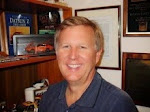
This is Dave Edstrom's personal blog called Photons and Electrons. This blog is about technology, as well as some of my personal interests. I am the CEO/CTO of Virtual Photons Electrons. I was the CTO for MEMEX for three years, the President and Chairman of the Board for the MTConnect Institute from May 2010 to January 2014 and prior to that I spent 23 years at Sun Microsystems.
My thoughts and prayers go out to all the families, relatives and friends of those who lost their lives on April 16th, 2007 in this senseless tragedy.....
My memories of April 16th, 2007 started with a phone call from my wife. Julie called and said, "just wanted to let you know that John is fine." At the time I was on my SunRay reading email while on a con call when she called my cellphone. She never calls me during theday since she is a school teacher. "Why would John not be be fine?" I asked. She asked me if I was watching TV or listening to the news. Of course I was not watching TV or listening to the news. She explained what was going on. I immediately interrupted the Sun folks on the con call and quickly said, "I had to get off the call, there was a shooting at my son's school."
It was then that I turned on the TV and was shocked to see the peaceful and beautiful VT campus on the news. I started getting emails, phone calls from literally around the world checking on John. You sometimes forget in casual conversation that you mentioned something about your kids that your friends and colleagues remember. Every time a call came, I paused the DVR. I was getting the current updates from friend, colleagues\s and family all around the world via email and non stop phone calls. As the numbers kept rising, it became more and more surreal.
My son John was working for the Collegiate Times during his freshman year. He put together a very nice week long history of events starting on April 16th through April 23rd that shows what happened each day.
I can not imagine the horror the students and faculty must have felt. There was an article in the post today by Nick Miroff, titled, "A Year Later, Virginia Tech Is Still Healing" is a well written article worth reading. As Miroff points out:
"Virginia Tech students have learned to talk about it in shorthand, if they talk about it at all. This Story
They do not use the words massacre, or shootings, or rampage. They call it "April 16th," and sometimes not even that. To say "four-sixteen" is enough. Everyone knows."
I have been back to VT many times since April 16th, 2007 both as a parent and working for Sun Microsystems where I have given talks and brought down Sun's thought leaders to speak at VT's ACM where my son John is President. Each time, the first thing I do is visit the memorial
Governor Kaine has did a good job demanding there was the VT Task Force. Governor Kaine stated:
"On April 16, 2007, Virginia Tech University suffered a terrible tragedy. Today, my thoughts and prayers are with the victims and their families and the entire Virginia Tech community.
"In the year that has passed since that horrible day, we have grieved for those we lost and prayed for the comfort of their loved ones. We have rejoiced in the recovery of those who were injured. We have been inspired by the unfaltering hope and Hokie spirit of Virginia Tech. And we have renewed our commitment to do even more to learn lessons from that day and to make our campuses and communities safer.
"As I think about the victims' families, I am at a loss for words to express what is in my heart. The courage and strength they have shown in the face of such tremendous, tragic loss is awe-inspiring. We have been inspired by the resilient Hokie spirit of Virginia Tech, both in Blacksburg and around the world. Since that tragic day last April, the unshakeable sense of unity and hope demonstrated by the Hokies has touched the lives of people around the world. Their focus on pulling together to support their school and each other in the days after the shooting, and their commitment to public service through the VT Engage program in the months that followed has moved us all.
"We still have work to do. A continued commitment to improvement is the best tribute we can pay to those who lost so much. And as we move forward, we will continue to be inspired by those in the Hokie Nation."
VT seems to have made the right changes. The VT Task Force seemed to not pull any punches when it came to how the University should have dealt with the events on the morning of April 16th, 2007. As the AP reported and I FULLY AGREE with Governor Kaine about purchasing firearms at gun shows. Virginia needs to get its act together. This loophole is INSANE!
"Gov. Timothy M. Kaine proposed mandated background checks yesterday for everyone who attempts to purchase firearms at gun shows - legislation that he called critical to helping prevent future tragedies like the shootings at Virginia Tech. Many families of those killed or injured in the April shootings have called on legislators to close Virginia’s so-called gun show loophole, which allows people to purchase firearms from unlicensed sellers at gun shows without having to submit to background checks. Under current Virginia law, only licensed dealers are required to run background checks on customers.
“If by doing this, we can keep one family from having to go through what these families have suffered, it will be the best thing that the legislature will do this year,” Kaine said at Virginia State Police headquarters, surrounded by several of the victims’ families."
As President and Chairman of the Board for the MTConnect® Institute, I get asked all the time: "How did MTConnect come about?" It is a story that I love telling and it clearly demonstrates why AMT is such an exceptional association.
In March 2006, AMT asked me to come up with a speaker from Sun Microsystems who also had knowledge of manufacturing to speak at AMT's Annual Meeting in Lake Las Vegas. I went through three such speakers over a six-month period as each one either left Sun on their own or had their position eliminated. After the third speaker left the company, I was out of candidates. I felt embarrassed for both Sun and myself that I let AMT down. When I apologized to John Byrd, AMT's President at that time, for not being able to deliver a Sun speaker, John suggested that I do the keynote. I was more than happy to do this, but I knew little about machine tools. John came up with a great suggestion: I could spend two days at IMTS 2006 with AMT's CTO and VP of Technology, Paul Warndorf, in preparation for the keynote. It was a brilliant idea and I jumped at it. Paul took me around to countless exhibitors to learn about the different technologies and ask questions about them.
After we finished the two days, I met with John and Paul where I made two observations and two suggestions.
My observations:
Manufacturing does not have a manufacturing problem. Manufacturing has a computer science problem. The manufacturing industry was like the computer industry back in the mid-1980s. There were too many network protocols and the fight was to own the winning protocol. Back then it was very expensive and you had to place a bet on which network protocol was going to win. It could easily be an additional $700 to enable your PC to be networked in the enterprise. TCP/IP and ethernet eventually won the network battle. When this happened the number of computers networked grew by multitudes, as did the software that would take advantage of the ubiquitous networking. It was the classic story of a rising tide lifting all ships.
Until you have an open and royalty-free way for these machine tools to speak to the rest of the world, nothing else really matters and manufacturing will just continue to struggle. The technologies are already out there today with XML, http and TCP/IP. There was no need to reinvent the wheel. A usable solution could be built on the de facto internet platform that already existed. Additionally, it was important to avoid the "country club approach" that had failed in the past in manufacturing and other industries — the kind where you charge for the protocol and you charge for each deployment.
The suggestions:
You need an economic wake-up call on why it is important to have an open and royalty-free way for these machine tools to speak to the rest of the world.
You need someone who has led a revolution or two, since this is what we are really talking about. They asked me who I suggested. I said the only person I would recommend would be Dr. David Patterson of the University of California at Berkeley (UCB). Dave Patterson is a computer pioneer and a true legend in the computer industry. Dave is one of the most recognizable names in computer science. I knew Dave because he was the advisor at UCB to Bill Joy. Bill was a co-founder at Sun and has been called "the Edison of the internet" by Fortune Magazine. Bill is a legendary programmer and system visionary. I also knew Dave from working with him when I was chairman of a futures conference in 2000.
John Byrd asked if I would reach out to Dave Patterson. Luckily, Dave agreed to work on the project provided I come out and brief him and that we work together on both presentations. I was thrilled to work with someone of Dave Patterson's stature. It was like being a high school basketball player and having Michael Jordan say he wants to work closely with you.
Dave and I worked very hard together to create two hour-long keynote speeches. Dave joked that if he knew how much time he was going to put into it, he might not have said yes to me. But our presentations were a huge success. Rick Kline of Gardner Communications came up to me afterwards and said that our presentations were two of the best that he had ever seen in manufacturing. It was great to see that we'd had such an impact.
Doug Woods was AMT's Chairman of the Board, leading AMT along with John Byrd. John and Doug suggested that AMT seriously consider our proposal for a common way for machine tools to speak using proven internet protocols. I told my wife that night that I felt great about what Dave Patterson and I had accomplished, but I was not convinced a manufacturing association had the courage to execute this plan to revolutionize manufacturing.
John and Doug proved me wrong. In November, just one month after the AMT Annual Meeting, a small group of us went to meet with Dave Patterson at UCB. Dave brought in Dr. Armando Fox from the Computer Science Department to help lead this effort, since Dave simply did not have the time. Paul Warndorf, AMT VP of Technology, brought in Dr. Dave Dornfeld of UCB's Mechanical Engineering Department to join the MTConnect team. Armando later brought in Will Sobel, who was an Assistant Professor at UCB. It was Will who did the real heavy lifting with MTConnect. It was Will who put countless hours leading the efforts to create the actual spec and writing the adapters, agents, demos and so many things for MTConnect. Will continues to do a lot of the heavy lifting today, but his time is also spent running his new company, System Insights. MTConnect would have never happened without Paul Warndorf's expertise, passion and guidance. Paul has been MTConnect's shepherd, conductor and guiding light.
I am very proud of the work I did with Dave Patterson to lay out the roadmap for MTConnect. That was the seed and I am extremely proud to have planted that very important seed. It was AMT that funded MTConnect. We used the working groups made up of industry experts, which was the exact same approach that Sun used to create Java. It worked for Java and it is working for MTConnect. We pulled together a diverse group of very smart people like Paul Warndorf, John Byrd, Doug Woods, Dr. Dave Dornfeld, Will Sobel, and Dr. Armando Fox and many others to create MTConnect working groups.
John Byrd has said that, "MTConnect will be more important in the 21st century for manufacturing than CNC was for manufacturing in the 20th century." I could not agree more. MTConnect continues to grow at an incredible pace and I know John Byrd will be proven 100% correct.
I remember ~20 years ago, a scientist at USGS loading up Linux on countless (ok about 50) 3 /1/2" floppies) and I thought, why are you screwing around with this? I was wrong :-)
In order to prime the pump for success stories, my company,Virtual Photons Electrons, will provide one FREE MTConnect/Virtual Photons Electrons polo shirt to anyone
who provides three documented MTConnect success stories. The shirt will be a
short sleeve polo shirt with the MTConnect logo on the left chest area and Virtual Photons Electrons
on the right sleeve. Yes, I am putting my money where my mouth is :-)
How do YOU get one of these GREAT shirts?
Send three MTConnect success stories to me: (MTConnect members, you know how to reach me)
Include the following for each success story:
MTConnect Success Story Template
Company Name:
Customer email:
Date MTConnect Deployed:
Approximate number of systems MTConnect is deployed on:
(notice I am not saying exact amount if customer views this as proprietary)
Types of manufacturing equipment: (notice I am not saying exact name of manufacturing equipment if customer views this as proprietary)
Type(s) of software deployed: (notice I am not saying exact name of software if customer views this as proprietary)
The business and technical reasons WHY the customer went with MTConnect:
(a paragraph)
ROI from both a business and technical standpoint:
(a couple of paragraphs)
Permission from customer to use this information on MTConnect.org under success stories.
More info is obviously better, but I am trying to balance our need for success stories
and customers need for some degree of privacy. This is the NUMBER ONE REQUEST
we get at the MTConnect Institute - examples of MTConnect success stories.
Thanks!
--Dave Edstrom
President and Chairman of the Board
MTConnect Institute
One of the real privileges that I have, as President and Chairman of the Board for the MTConnect Institute, is working with the thought leaders in manufacturing. I always learn so much from these individuals that I sometimes feel I should turn on my voice recorder on my iPhone so I do not drop any bits from our conversations. Many times I am taking notes so fast on the phone that I am afraid I will get carpal tunnel syndrome by the end of the conversation.
One of those industry thought leaders in manufacturing is Dr. Dean Bartles. Dean is the VP and General Manager for Large Caliber Ammunition for General Dynamics - Ordinance and Tactical Systems (OTS). Thanks to Dean, General Dynamics - OTS is an Institute Partner for MTConnect. Dean is also an MTConnect Board Member.
In this article, Dean brings out many great points regarding the challenges in manufacturing today and where manufacturing is going. Dean brings out the point that all this data that is coming from machine tools will go to the cloud. I could not agree more. When I first came up with the idea/suggestion for MTConnect back in the fall of 2006, I was asked by Sun Microsystems management (where I was working at the time), "Dave, why are you so involved in machine tools and manufacturing, where is the play for Sun?" My response was, "when all these machine tools start spitting out gigabytes of data, where do you think they will want to store and analyze the data?" The key part of that sentence is store AND analyze the data. Yes, you could throw some 2TB drives on a PC and store the data. The problem is that you would not be using a PC or a PC server to analyze terrabytes of data. It would also make no financial sense today to start buying racks of PCs to do the analysis of data. You should be storing AND analyzing this data in the cloud. Yes, it is true that most plants do not have internet access on the factory floor, but trust me, this is changing, very, very fast because of MTConnect, monitoring, diagnostics, full plant floor to data center integration and cloud computing.
First Person: Manufacturing View on Cloud Computing
The editor of Area Development magazine recently spoke with Dave Edstrom, director of the Office of Strategic Innovation at AMT, about the nature of cloud computing and how it affects manufacturers. Edstrom also recommends that manufacturers read “Above The Clouds: A Berkeley View of Cloud Computing,” a white paper from the University of California at Berkeley.
Dave Edstrom, Director, Office of Strategic Innovation, AMT The Association for Manufacturing Technology (March 2011)
What is “cloud computing”? Edstrom:Simply put, cloud computing is when you access an application and all the processing and storage happens someplace else besides the PC or Mac that you are currently sitting in front of at the time. This “someplace else” is usually a massive data center with hundreds of thousands of computers sitting in large racks with massive amounts of storage. The reason cloud computing is so popular today is not that it sounds cool, but rather that it simply makes good economic sense.
Why is there so much confusion around the term cloud computing? Edstrom:The confusion exists because cloud computing is a broad, umbrella term for many different types of computing today. If you ask 10 people what the term cloud computing means, you’re likely to get 11 different answers. Amazon’s Elastic Cloud Computing, Flickr, Gmail, Google, LinkedIn, Facebook, QuickBooks, Google’s App Engine, BIRT onDemand, SalesForce.com, Carbonite, and Farmville are just some examples of applications or software development frameworks that run in the cloud.
Director for the Office of Strategic Innovation, the Association for Manufacturing Technology (AMT)
Does it matter where servers are located when processing information requests? Edstrom:For the most part, end users do not know and do not care about the physical location — provided it is secure and managed in a professional manner. What is very important is the speed of your connection to the Internet. One of the key building blocks of cloud computing is broadband or a fast pipe to the Internet.
How will cloud computing affect manufacturers? Edstrom:Cloud computing gives manufacturers the ability to avoid the countless business and technical issues associated with running their own data centers; they will save money by only paying for the computing resources when they need them on a “pay-as-you-go” model.
Manufacturers are tired of all the patching, upgrading, malware, viruses, and the plethora of issues that come along with running your own data center. If you are a small manufacturing shop, it is very likely that either you or someone else in your small shop wears the hat of IT manager. However, you do not have time to constantly worry about all of the patches, upgrades, and system administrative work — you just want to run your shop.
What is meant by the “elasticity” of the cloud? Edstrom:Elasticity of the cloud is the ability to both grow and shrink the number of servers you need in the cloud dynamically depending on the load. For example, most companies have to purchase the number of computers that they will need for the busiest time of the year. A manufacturer of winter sports equipment might very well have certain times of the year that are much busier than others. With the cloud, you can scale up to hundreds of servers during your busy times and then drop down to a handful during the very slow times — paying only for what you use.
Can you provide an example of manufacturing firms successfully using cloud computing? Edstrom:MTConnect is a great example. Manufacturers are embracing MTConnect, which is an open and royalty free mechanism to get real data from manufacturing equipment. It is not unusual for gigabytes per hour of data to come from a variety of machine tools or manufacturing equipment. Manufacturing companies do not want to store all this information in their own data centers. They are storing this in the cloud and doing the analytics in the cloud as well. There are a number of manufacturing software companies that are offering this type of service. This allows manufacturers to view both real time and historic data on their shop floors at any time, anywhere, on any device.
Are there regulatory issues that need to be addressed? Edstrom:Absolutely. Just because your processing and data is stored in the cloud does not remove your legal and accounting responsibilities. The best advice is that you cannot assume anything. Whether you use the cloud to create and run your own applications or simply use applications from a software company that runs in the cloud, you must go in fully realizing that you own all of the legal and accounting requirements.
What about data security issues? Edstrom:An important point to remember is that ALL of your data should be encrypted when it is in flight or at rest. What this means is that you should always have a secure connection to your data, and your data should always be encrypted whether it is sitting on a storage device or it is being moved from one location to another (on a network or physically). It is important to understand all aspects of security including the physical security of where the cloud computing companies are housing their servers.
How does a manufacturer go about performing due diligence when choosing a cloud service provider? Edstrom:An SLA, which stands for Service Level Agreement, is an important part of due diligence. Simply stated, an SLA outlines the level of uptime that you will be guaranteed. Are you putting all of computer and storage needs in one data center? What if that data center goes down? Is your data replicated? Is there an immediate failover from one data center to another? These are the types of questions you must have answers to in writing.
What functions cannot be performed through cloud computing? Edstrom:This is a really important question. It is not that some applications cannot be done in the cloud. The question really becomes, which applications do not lend themselves to the cloud? Applications such as video games are great examples of a class of application that challenges the cloud. The reason for this is the amount of data that must come down the Internet pipe every time you make a move.
I am very pleased to announce The Office of Strategic Innovation Roundtable (OSI/Roundtable). The OSI/Roundtable is a half-hour webcast that I will host on a bi-weekly basis. Guests will share their business and technical knowledge that focuses on manufacturing innovation. Topics and speaker suggestions are encouraged! Please drop me a note on any suggestions that you have. Ideally, I would love to have AMT members and/or IMTS exhibitors as well as manufacturing and computer industry thought leaders on the OSI/Roundtable. Typical episodes will run 20 to 30 minutes.
The goal of the OSI/Roundtable is to provide thought-provoking discussions that can be listened to and watched anywhere, at any time, on the most popular devices, as well as to make it as easy as possible for guests by simply capturing our conversation with Skype. I will take care of all the production aspects of inserting graphics, information, editing and post production. All the speakers need to do is to get on Skype with me to have a brief discussion with questions I will send ahead of time. A video camera is not required since we are capturing voice and inserting graphics and text after the interview. I want to make it as easy as possible on speakers.
The first guest on the OSI/Roundtable was John Turner, Director of Technology for FA Consulting and Technology. John has more than 30 years of experience in the manufacturing industry with a large chunk of that being at GE Fanuc. John was the first person to create an MTConnect appliance, which he unveiled at IMTS 2008. In this 30-minute OSI/Roundtable, John discusses:
The many lessons learned in machine assessment over three decades.
Taking full advantage of the features and functions of machine controllers.
When Ruth Edstrom was a young girl living on a farm near the town of Randolph, Minn., she loved to draw pictures of rural life for her family.
The scenes captured a small-town, bucolic Norman Rockwell life of barns, dairy cows, farmhouses and churches. The town’s population was 200, but most people, including Edstrom’s family, lived outside of town on family farms.
"It was the 1940s, and we grew up during hard times for farmers," she said. "You could definitely say it was a small-town life, and most people were very practical-minded. I don’t think we ever went to a restaurant growing up."
"I loved to draw, but I never thought of myself as an artist. It never even crossed my mind to take classes or anything," said Edstrom, 75.
That changed in 1972 when she was a young officer’s wife stationed at Richards-Gebaur Air Force Base in Kansas City. At the time, she had been married to her high school sweetheart, John, for 17 years, and the couple had two young children, David and Julie.
"When my husband was in Vietnam, another officer’s wife, an art major, offered oil painting classes to members of the Officers Wives Club," said Ruth Edstrom. "I signed up and discovered I could paint."
Her first painting was from a photo of a painting in an art book. "It was a house in the country, and I just tried to copy it. I used my fingers, a spatula, whatever to paint it," she said.
She continued taking classes in Kansas for the next three years, until John Edstrom was transferred to the Pentagon in 1975, where he became chief of the airfield facilities. The couple bought a home in Burke, then a small community of about 200 people.
Ruth Edstrom set aside her hobby for a while after the move as her family settled into their new home. In 1986, after taking a tour of the Torpedo Factory in Old Town Alexandria, she decided to start painting again.
"I took a series of oil painting classes through the Fairfax County Park Authority, and then I enrolled in drawing and oil painting classes at the Torpedo Factory," Ruth Edstrom said. "In the fall of 1986, I started classes with Suzanne French Luke at her gallery in Occoquan, which I continued until she moved to Florida the summer of 1998."
In 1993, she joined the Springfield Art Guild (SAG), a non-profit group interested in promoting fine art and fine crafts through educational programs, juried shows and classes for adults and children.
Since joining SAG, she has been part of the Wednesday Art Group with Instructor Susan Norman. "I enjoy the camaraderie of painting with the ladies in the Wednesday group so very much. I truly enjoy painting and feel so blessed and thankful that God granted me a little talent in this endeavor," she said.
In October 1993, Ruth Edstrom represented SAG by showing one of her oil paintings, called "Springtime in Virginia," at the annual Fairfax County ARTSFAX show. Another one of her paintings received an honorable mention at the SAG show at Northern Virginia Community College, and she was named SAG’s Artist of the Month in September, 2010.
"She just does marvelous artwork, and it really touches people," said Skeeter Schied, past president of SAG. "She’s an artist who responds to beauty. She is a longstanding member of the guild, and nothing, and I mean nothing, stops her from painting."
Ruth Edstrom’s paintings capture the most important things in her life: her children and grandchildren, family vacations and cherished scenes from childhood. Although she gives away most of her paintings to her family and friends for special occasions, she has done commissions, particularly for golf courses.
"John and I are avid golfers, and we’re very involved in the Fort Belvoir Golf Community, so many of my paintings depict scenes of golf courses," Ruth Edstrom said. She and her husband frequently travel with friends, including Jim and Nancy Ross of Burke, to Augusta, Ga., for the Master’s Golf Tournament, and to the South Carolina coast, where the Edstroms have played in many tournaments.
"Ruth painted a lovely painting of the flowers that surrounded our beach house in Murrell’s Inlet in South Carolina," Nancy Ross said. "She is so talented. I just don’t know how she has the time to do it all."
As Ruth Edstrom walks through her home, she and her husband point out the paintings that have special meaning. In the family room hangs a series of three paintings of her family’s farm house, and her husband’s family’s farm. Over the fireplace mantle is a winter scene of her house.
"You know, I also painted our house in spring, summer and fall. They’re for my grandsons," Ruth Edstrom said.
Both of the Edstroms’ children graduated from Lake Braddock Secondary School and remain in the area. Julie Edstrom has a doctorate and works as a school counselor at Chantilly High School. David Edstrom, who launched his own thriving computer business, and his wife, also named Julie, have three sons — John, 22, Michael 20 and Timothy, 16.
Note: I added the above three paintings which reside at our house and my mother references below in the article.
"I’ve painted my grandchildren so many times," said Ruth Edstrom. "I painted many when they were little guys about 2-years-old. There’s one of Tim playing with his Dad’s tractors and old toys, John fishing and one of Mike feeding a bunny. IMPORTANT AUTHORS NOTE: As Mr. Dave Edstrom, father of John, Michael and Tim pointed out, "do not get the wrong impression of Michael and the playing with a bunny painting my mother did. Let me be crystal clear here, Michael could KICK John and Tim's butts at that same time and never break a sweat." I also painted the three of them at the beach, looking at turtles. I gave that painting to Julie and David for their 10th anniversary."
One of John Edstrom’s favorite paintings is of a little girl sitting in field of flowers. "That painting just flows. The colors are vivid, and it does remind me of our daughter," he said.
Julie Edstrom’s favorite painting is her mother’s first. "She is one of the most creative and artistic people you will ever meet," Julie Edstrom said. "She can sew, decorate cakes, draw and paint beautifully. We are blessed as a family to have so many of our memories captured on canvass to keep forever."
Above is a painting she did when all of us went to visit John in 2009 when he was interning at Microsoft in Seattle. The boys were climbing Mt. Ranier.
This is a great video at the International Manufacturing Technology Show (IMTS) website and title:
"It's become a familiar story to the manufacturing industry: Old-style manufacturing jobs have gone the way of the typewriter, and newer positions require more advanced technical skills. But on March 1, the story got some mainstream treatment when it was featured on NBC Nightly News.
In a spot that featured MAG Americas, an IMTS exhibitor, Tom Brokaw spoke with MAG executives and employees, among others to discuss the ways that manufacturing companies are now developing their own talent. The equipment in the background at the school was from IMTS exhibitors Amatrol, Inc./Oxygen Education."
"In my opinion, any future defense secretary who advises the President to again send a big American land army into Asia or into the Middle East or Africa should have his head examined, as General MacArthur so delicately put it."
This week, I am at the MFG Conference in Chandler, Arizona working the MTConnect booth, speaking to the AMT's Board of Directors on MTConnect and MTInsight as well as attending conference sessions.
ConnectOne by System Insights is a hardware solution to support MTConnect compatibility in legacy devices and sensors. ConnectOne is a key enabling technology for System Insights’ vimana[TM] platform, and enables compatibility for legacy devices that do not have native MTConnect support. ConnectOne supports data collection over serial, analog, and digital interfaces to support a variety of factory equipment.
ConnectOne comes with a power meter for energy and power quality monitoring, which can be applied along with optional sensor inputs in monitoring the activities of the machine tool. ConnectOne enables wireless data transfer and integration by using state-of-the-art mesh networking 802.15.4 technology, which allows for simple, ad-hoc installation and usage. Below, Athulan (on the left) and Will are showing off their new ConnectOne box.
The first guest on the OSI/Roundtable is John Turner, Director of Technology for FA Consulting and Technology. John has over thirty years of experience in the manufacturing industry with a large chunk of that being at GE Fanuc. John was the first person to create a MTConnect appliance back in 2008 that he unveiled at IMTS 2008. Below John is discussing the MTConnect appliace he created with Dr. David Patterson of University of California at Berkeley.
In this OSI/Roundtable, John discusses:
· The many lessons learned in machine assessment over three decades.
· Taking full advantage of the features and functions of machine controllers.
"Concern is increasing that this decline has gone too far. “I think there is a growing recognition that a diminished manufacturing sector will undermine our economy,” says Mark Zandi, chief economist for Moody’s Analytics.
How did the nation get into this situation? It gambled, in effect, that by importing more from foreign suppliers and from American companies that had set up shop abroad, consumer prices for manufactured products would fall, without any sacrifice in product quality. Low-wage workers abroad would make that happen."
More and more people are starting to realize that when manufacturing moves off shore, suppliers follow, R&D follows and is is a very slipper slope...
I ran into Jeff Schwartz at Tysons Corner yesterday. Jeff asked if I heard about Marty Mesmer. Unfortunately, I had heard that Marty Mesmer had passed away. I know Marty through coaching in basketball in the Ashburn area. Marty's son, Mark, and my son John were the same age. We were both coached our sons from 4th grade through 8th grade. Marty was the guy who would bring all the coaches together to have the draft. Now if you have never been to a boys basketball draft, you have never been to a bunch of over-competitive fathers trying to load their team up with the best ball players. During those five years there were countless loud discussions between the coaches on every topic known to man as it relates to basketball. Everyone except for one guy - Marty Mesmer. Marty was ALWAYS above the fray and EVERYONE like and respected Marty. Marty was the type of guy who always had a smile on his face and never took the game too seriously. Marty kept everything in perspective.
I was at Marty's house in 2001 with all the other 8th grade coaches for the draft. Everyone comes to Marty's house from work and they are ready for the draft. The 8th grade is the final year that a lot of kids play and it is the last year that fathers coach their sons - so it is sort of like March Madness for Fathers and their sons. Everyone asks, "let's get the draft done Marty." Marty just smiled and said, "no, we have food, beer, wine, sodas and water that we are going to enjoy first." Marty then comes up to me and says, "I know these guys Dave, things will go a lot easier after they have a few drinks in them." I just smiled and said, "you're brilliant Marty." He was brilliant and just a hell of a great guy. It is a very sad day and Marty will be absolutely missed.
I will be at Marty's funeral this Saturday. I am sure it will be standing room only. I am sure that there will be lots of coaches there as well. I am sure there will not be a dry eye in the house....
Below is the obituary from The Washington Post:
MARTIN JOSEPH MESMER
Marty Mesmer died peacefully at his home in Ashburn, VA, on Tuesday, February 8, 2011 surrounded by his very loving family and his many friends. He had leukemia. The family would like to say a special thanks to all the caring and compassionate oncology nurses at Virginia Hospital Center.
Marty was a devoted and loving husband to Elaine, and a proud and devoted father to sons Mike and Marc and daughter Katie. Marty was the son of the late Fred and Dorothy Mesmer. He is survived by his siblings Ricky and Joe Mesmer, and a sister, Dori Stanwick, and predeceased by his brother John. Marty was born in Washington, DC and was a proud graduate of Gonzaga College High School and the University of Maryland.
He leaves behind a large loving extended family as well as many friends who cherished him for his kind spirit and enthusiasm for life. His also shared his passion and love for the game of basketball by coaching both youth boys and girls teams for years in his community.
Mr. Mesmer began his career in real estate, eventually establishing Walsh, Mesmer and Associates and then merged with Fred A. Smith Company where he was a partner and President.
He is a member of St. David's Episcopal Church in Ashburn, Va. where a memorial service will be held on Saturday February 19, 2011 at 11 a.m. The family asks that in lieu of flowers, donations be made in Marty's name to Capital Hospice, Philanthropy Office, 2900 Telestar Court, Falls Church, VA 22042.
"The story goes something like this: For decades, the governments of China and other Asian countries offered low wages and extravagant subsidies to lure U.S companies to build new plants in their countries. For years, Americans acquiesced to this off-shoring because it fattened corporate profits, lowered consumer prices and fit neatly with a a free-trade-free-market consensus among the economic elite. Any suggestion that we try to stem the outflow of investment or the inflow of products was dismissed as protectionism, and any suggestion that we try to match those subsidies was derided as a misguided effort to have government pick "winners and losers."
I don't agree with all of his points, but I do agree with:
NIST was my account for six years starting in the mid 1980s when I was at Sun Microsystems. I loved having NIST as an account because, as a Systems Engineer, NIST was always doing something very interesting and pushing the limits on what Sun could provide in terms of computing power. One of my first visits to NIST, I was brought into a conference room and saw the following engraved in the floor:
“I often say that when you can measure what you are speaking about, and express it in numbers, you know something about it; but when you cannot measure it, when you cannot express it in numbers, your knowledge is of a meager and unsatisfactory kind; it may be the beginning of knowledge, but you have scarcely in your thoughts advanced to the state of Science, whatever the matter may be.”
Lord Kelvin (Sir William Thomson)
That phrase is built into the DNA of computer science and science in general. To provide a simple example of this, when you walk into a data center that houses thousands of computers in countless racks, you will find that every single one of those computers is monitored extremely closely. According to industry and academic experts only 4 to 5 percent of machine tools are monitored today. This percentage is mind boggling to me. How can any plant possibly make intelligent decisions if they can not quantify what a machine tool is doing?
The big reason why only 4 to 5 percent of all machine tools are being monitored today comes down to two reasons — technical and cultural. Too often when you speak to someone at a smaller job shop or plant, the reason for not monitoring is the cost and/or time to implement. MTConnect addresses the technical side of the challenge by making it is easy to get data off a machine tool in an open, royalty-free and standard fashion. MTConnect ‘s motto is “Different Devices, Common Connection.” MTConnect is all about dramatically lowering the barrier to entry to enabling a machine tool to speak to the rest of the world in an open fashion.
MTConnect can address the technical side of this challenge, but how do you change the culture component of this equation? As we all know, culture is a huge issue when driving change. This is true whether it is in a business or any other activity that involves humans. Education is the key to driving culture changes. There are many lessons from the computer industry that can be applied to manufacturing to drive change in the culture through education.
Let’s look at some of the laws in the computer industry and see if there are similarities in manufacturing. Bob Metcalfe, the inventor of Ethernet, made a statement that has now become known as “Metcalfe’s Law.” Metcalfe’s Law basically states that the value of any network is the number of users or devices connected to the network squared. If we apply Metcalfe’s Law to manufacturing, we would modify it slightly to state: The value of any manufacturing shop floor’s network is the number of pieces of manufacturing equipment that can speak MTConnect squared. Why MTConnect squared and not just the number of pieces of manufacturing equipment squared? Because it is MTConnect that makes these pieces of equipment able to all speak the language of the internet, which is XML. XML is an abbreviation for eXtensible Markup Language and it is the default language on the internet today. XML makes it extremely easy for software applications to talk to MTConnect-enabled manufacturing equipment.
One of the most common misconceptions about MTConnect is that it is an application that you purchase. MTConnect is a protocol that defines how manufacturing equipment will speak to the outside world as well as dictionary of what these manufacturing terms mean. Think of MTConnect as Bluetooth for manufacturing with a dictionary of terms. Why do I emphasize the dictionary? Because the dictionary gives meaning to the manufacturing terms. For example, imagine the English language without a dictionary. What would we have? We would have 26 letters but no words. Without a dictionary of words, we would have everyone defining their own words, and that is exactly what we had with manufacturing prior to MTConnect
Former Secretary of Defense Donald Rumsfeld liked to say, “there are known knowns, known unknowns and unknown unknowns.” Stated another way, “you don’t know what you don’t know.” The real purpose of MTConnect is to quantify the known unknowns and provide the framework to discover the unknown unknowns. You can’t manage what you don’t know. And unless you are quantifying what you don’t know, then you are shooting from the hip, which is never a good idea.
So, why would Lord Kelvin LOVE MTConnect? Because in order to quantify how well a manufacturing plant or job shop is doing, you first must easily get the data and put it in a standard quantified form. That is exactly what MTConnect does. Getting the data in an open and royalty-free way is what will allow you to first monitor what you are doing and then to share the information with all your applications and all your partners. While the most obvious use of getting common information out of a piece of equipment is monitoring, that is just the tip of the iceberg. The real win with MTConnect is when quantified information is available anytime, anywhere to any application, to any partner and on any device, it drives up productivity. I imagine Lord Kelvin would change MTConnect’s mantra to: “MTConnect – to measure is to know.”
I worked for Fairfax County Park Authority (FCPA) my senior year in high school - 1976-1977.
Basically FCPA paid me to spend most of my time in the gym to break up fights and determining who had next game on the full court. Everyone who worked at the park hated this but me. I loved it since I played basketball and knew a bunch of the guys playing. A lot of great players came from DC to play at the park back then.
The cool thing about working in the gym is I was watching some great basketball and I was both judge and jury in the gym. Only once during that year did I need to bring down the FCPA Police. The one time was when this guy was let in the back entrance. Normally I would just say, "hey slim, go upstairs and pay and I will not have you kicked out." This one time when I told this go to go up front and pay, he cursed me out. I told him that if he does not go up and pay, I was going to have him arrested. He cursed me out again saying he was a Fairfax County resident and did not have to pay. He also told me what I could do with myself. I went up and talked to my buddy Officer Taylor. Officer Taylor said, "what do you want me to do Dave?" I said I want to send a message to everyone in the gym that you do not screw with Dave or you will pay. He said, "ok, let's do it." Officer Taylor was a great guy and a real friend. We he goes down to the gym ahead of me. Officer Taylor asks the guy, "sir, did you pay?" The guy says sheepishly, "uh no, I did not Officer, but ...." Officer Taylor interrupts him and says to, "please turn around". Officer Taylor puts hand cuffs on him and says, "you are being charged with defrauding an Inn Keeper." After the cuffs are on the guy, I go up to him, I drive my fingers in his chest and say, "F*&k me? F*&k you a$$hole!"
That story spread like wild fire and the number of times I had to ask someone to go pay went down by orders of magnitude :-)
My father, who I nicknamed Slim in 1976, and I took the perfect three day mini vacation together this past week. First, why I call my father Slim. The nickname Slim came about because I was working for Fairfax County Park Authority (FCPA) my senior year in high school. During that time period the generic term in the gym was not "hey buddy", but "Slim" when you wanted to talk to someone you did not know. Everyone called everyone Slim in the gym. I started calling my father Slim and it stuck :-)
Last fall my perfect wife, Julie, says to me, "Dave it has been ten years since you got your Corvette, isn't it time for a new Corvette?" That is just one reason why she is perfect. As luck would have it I was taking my 1998 Corvette into Tony's Corvette Shop for some minor work the next day, so I told Tony what Julie told me. Tony then said, "you know Dave, Julie is right." Tony then goes on to say that it is starting to get harder and more expensive to get parts for my 1998 Corvette. GM only has to carry parts for ten years. He then told that as someone who drives the hell out of their Corvette, that I should think about a newer one. He then told me about the other costs of parts rising on the C5s (1997-2004). The EBCM Electronic Brake Control Module was no longer being made by GM for the C5s and he had to have them rebuilt - not a cheap proposition. Something to think about...
After a week or so thinking about it, I decide Julie and Tony are right. I start looking around for a used Grand Sport. After a couple of months of scouring the US for the exact one, I decided I was going to order a brand new Corvette, take the museum delivery and bring my father along if his health was up to it. The museum delivery is a $495 option known as R8C. Corvette owners refer a lot to the order codes. Everyone who I talked to said it was well worth it and a once in a lifetime experience. I decided to first go to Pohanka Chevrolet because that is where my buddy John Meyer purchased his new Corvette and had a great experience there. I went in the day after Thanksgiving with a printout of
the best internet price I could find on a similar model of Grand Sport I wanted. The salesman David Coggin went and ran the numbers and they beat it by $3,000. I just looked at the numbers and said let's do it. The schedule I was told would be early to mid March for the actual pickup. That was a good schedule because my father's chemo would be finishing up by then and it the weather should be less of a factor between here and Bowling Green, Kentucky where they have the GM Assembly Plant for Corvette and the National Corvette Museum (NCM). First, I was going to get one way flights to Nashville, then drive in from there. With my father's health, sitting in a germ filled airport and germ filled plane did not seem like a good idea. I decided for a one way rental to Nashville airport and then the NCM had a special one-way rental to the NCM from Enterprise.
The driving factor on why and how I decided to time this new purchase of a brand new Corvette Grand Sport was the one year anniversary of my separation package from Sun/Oracle. HUGE thanks Scott McNealy, Bill Joy, Andy Bechtolsheim and Vinod Khosla for having the foresight to have a change in control package for Directors and VPs! Besides buying a new large screen Sony, I did not spend any of that large check. So, I decided that part of that check would be used to purchase new Corvette Grand Sport with the museum delivery option. I timed it almost to the exact day of Sun being purchased by Oracle.
As luck would have it, I got a call that my Grand Sport would be ready to be picked up on February 3rd. This was great providing my father's health (finished four rounds of chemo for his CLL and is getting treatments currently to get the good white blood cells back up where they should be) was up to it and the weather was not an issue. Driving a new Corvette back through the mountains of Kentucky, Tennessee, and Virginia is not anyone's idea of fun. We obviously had to play it by ear. The week before, my father told me that he felt he would be fine. Great! However, the weather was looking to be a real disaster. It was literally looking like the perfect winter storm. There was a huge arctic cold front coming deep into the south that would meet with a gulf front to create the mother of all winter storms. I was monitoring the weather and thought I saw a window on Tuesday afternoon and Wednesday early where we could get out in an SUV and deal with any light snow that might hit. The weather was just north of us on Tuesday and Wednesday. Returning, it looked like Thursday would provide a window if we drove the 750 miles back in one day. I called the NCM and they said I should reschedule. I said I would make a game time decision at 2pm on February 1st. Slim and I looked at the weather forecast and thought there would be a small window we could hit - if we were really, really lucky....
Above was the first day of driving from 2pm on. We put in almost 400 hundred miles that included a nice long dinner with my two oldest sons. I knew my father was looking forward to spending all of this quality son/father bonding time when the first thing he does is pull out his audiobook
We had dinner with John and Michael at Sal's in Blacksburg before continuing on to Bristol to spend the night.
It was about 750 miles door to door.
Pulling into the National Corvette Museum with our one-way rental from Enterprise. It was actually 11:48 Central time.
Above is one of the photoshop pictures you can buy when you go through the tour.
These were just two of the many welcome screens they had with our names on them.
The sign in front of my new Grand Sport Corvette.
My new Grand Sport in front of the NCM Delivery Offices. They can do about 8 deliveries a day. Mine was the only that day with weather and the slow sales for Corvette right now. Normally 35,000 Corvettes are sold a year and it is down to 12,000 in the current economy.
Below is from the 2011 Corvette brochure on the Grand Sport:
The best combination of all-out performance and efficiency . Grand Sport coupe beat
every other production car with the exception of the Corvette ZR1 (very limited availability)
and a special $460,000 Lamborghini Murcielago in the 2010 edition of the Car and Driver
Lightning Lap at Virginia International Raceway. It lapped the circuit with a time of 2:58.8,
faster than the Audi R8 V10 and the Porsche 911 Carrera S. On the test track, Grand Sport
coupe delivers 1g of lateral acceleration and goes from 0 to 60 mph in less than four
seconds. Yet it does all this with an EPA estimated 26 MPG highway 1 and without a gas-guzzler tax. That’s what engineers call bandwidth.
What makes a Grand Sport? Start with a wider track, wider tires as well as wider fenders and
quarters. Add a high rear spoiler and special five-spoke Grand Sport wheels. Under the skin
add aggressive dampers and springs, large stabilizer bars, performance gear ratios, additional cooling, and six-piston front and four-piston rear brake calipers engaging cross-drilled rotors.
Slim in front of my Grand Sport at the NCM Delivery area.
Me sitting in the Grand Sport for the first time and getting ready to get an overview on the car's features from Ron. I watched the C6 Owners Video three times to get ready for the trip. There is o substitute for hands-on learning. The NCM has cameras so we sent text messages for family and fellow Corvette owners so they could watch on the NCM cameras.
Back view of the Grand Sport that looks down the hall of the National Corvette Museum.
We had the world's best NCM Tour Guide in Ron Barton. Ron worked for GM making Corvettes 35 years before he started working at NCM ten years ago. Here you can see that Ron is answering one of my countless questions that I had. I thought I knew a lot about Corvettes until I talked with Ron. He spent five hours with us the first day at the museum and the four days the second at the factory tour. My father and I took countless photos. Slim took the best photos. His new camera worked great.
Above is Wendell Strode, the Executive Director of the National Corvette Museum standing with my father. Both served in the Vietnam War with Wendell being awarded a Purple Heart.
I can not recommend the Museum Delivery Option highly enough. It is the best investment you will ever make for your new Corvette!
Wendell, Gary Cockriel, Lori Bieschke and Ron Barton were absolutely fantastic. They made us feel at home and very welcome. It was fantastic!
This is me in front of a 1963 Z06 serial number 1. This was part of the special back stage tour that you get as part of the NCM Delivery Option for a new Corvette.
Above is Slim lifting an all aluminum Z06 frame at the NCM.
Above is just one example of the exhibits in the NCM.
Above is the only 1983 Corvette left on planet earth. Chevy made 55 1983 Corvettes. The quality was terrible. Chevy decided to squash the 1983 year and go right to 1984. There were no 1983 Corvettes ever sold. They ordered all 55 to be crushed. Someone pulled one out and hid it. That one is the white one above that sits at the NCM. Great trivia question for your Corvette buddies.
This another of the paid for photoshop photos you can get.
Me and Slim after the five hour NCM tour and the detailed Grand Sport features demonstration on Wednesday night. After that photo, we left my Grand Sport at the museum and had a nice dinner in Bowling Green. When we drove the Grand Sport out of the museum for the final time all the museum employees were there clapping in a long line which was pretty cool.
Above is the 2nd brick that I purchased for my garage. Below is the brick that will be forever placed inside the National Corvette Museum to mark that day Slim and I picked up my new 2011 Grand Sport Corvette.
Above is me on November 11th, 2016 pointing out my and my father's Grand
Sport brick when I was with John Meyer for his delivery of his 2017
Grand Sport.
Above is me in front of the GM Corvette Assembly Plant Tour Entrance. It was pretty cool having your name up in big letters on the entrance. The tour is fantastic. Three hours watching new Corvettes start off on a 7 mile journey through the 1.5 million square foot plant. The only car they make here are Corvettes. We saw everything with our VIP Museum Delivery Tour by Ron. Having someone like Ron who had worked at Corvette Assembly Plants for 35 years was fantastic. I was also given the opportunity to "birth a new Corvette" by being the first person to start one up after it was completely assembled and ready for final testing. They also showed us a Carbon Edition Z06 that was extremely cool. No pictures are allowed inside of course.
Our NCM Tour Guide Ron Barton giving me the FOB for the new Grand Sport before we drove the 750 miles back home to beat the snow coming up behind us as we head through the mountains of Kentucky, Tennessee, and Virginia.
Failure was not an option. Slim and I took turns driving the Grand Sport. We used OnStar to get weather and traffic reports on the way back as well as messing with the Navigation system and XM. After dinner, I asked my father if he heard any news on Egypt and the protests going on there. He responded, "How the HELL would I know, we have been listening to 70s on 7 XM Satellite Radio for the past 486 miles!" My plan for father and son bonding had worked! :-)
The weather was not a factor for us but a nightmare for others. The picture above of the US and Canada gives you some idea. Chicago had two feet of snow and 50mph winds. Chicago Schools were closed for the 2nd time in 12 years. Dallas had one inch of ice. The south and midwest were nightmares. Ice storms and massive snows everyplace. The road between St. Lois and Kansas City (rt. 70) was closed for the first time EVER. New York City Schools were closed for the first time in 30 years. We REALLY had to find the right window and the right path to drive both there and back. Going there I had an SUV. Coming back we were in a Corvette - not exactly known for its winter driving :-) Check out these amazing photos of the winter storm of 2011 here.
We made great time heading back and got very lucky. I dropped my father off at about 11:15 pm and then got home around midnight. Julie and Tim got up to check it out. It was good to be home and not have to worry about any weather issues.
Back at home with the snow still on the ground. I now have the "Steve Ferry Problem", which is "Which Corvette Do I Want To Take Today?" :-)
With my two Corvettes and my wife's Mini Cooper S, we have over 1,000hp of sports cars in our garage.
I stated it earlier, and I can not recommend the Museum Delivery Option highly enough. It is the best investment you will ever make for your new Corvette!
With the weather, my father's health, it could have been a real disaster, but instead it turned out to be like one of the MasterCard commercials:
Price of new Corvette Grand Sport after discounts - $55,000
Price of three days of rental cars, hotels, meals, and Corvette souvenirs - $1,500
Spending three days with my father who is beating cancer - PRICELESS
That is why I called this blog entry: Three Perfect Days With Slim.
This is Dave Edstrom's personal blog called Photons and Electrons. This is the same name of the blog I had for Sun Microsystems for many years. I am the CEO/CTO for Virtual Photons Electrons, LLC. More info is available at http://VirtualPhotonsElectrons.com I was the CTO for MEMEX for almost three years. More information on MEMEX is at http://MemexOEE.com